
Which Homes Prices Are Appreciating And Why?
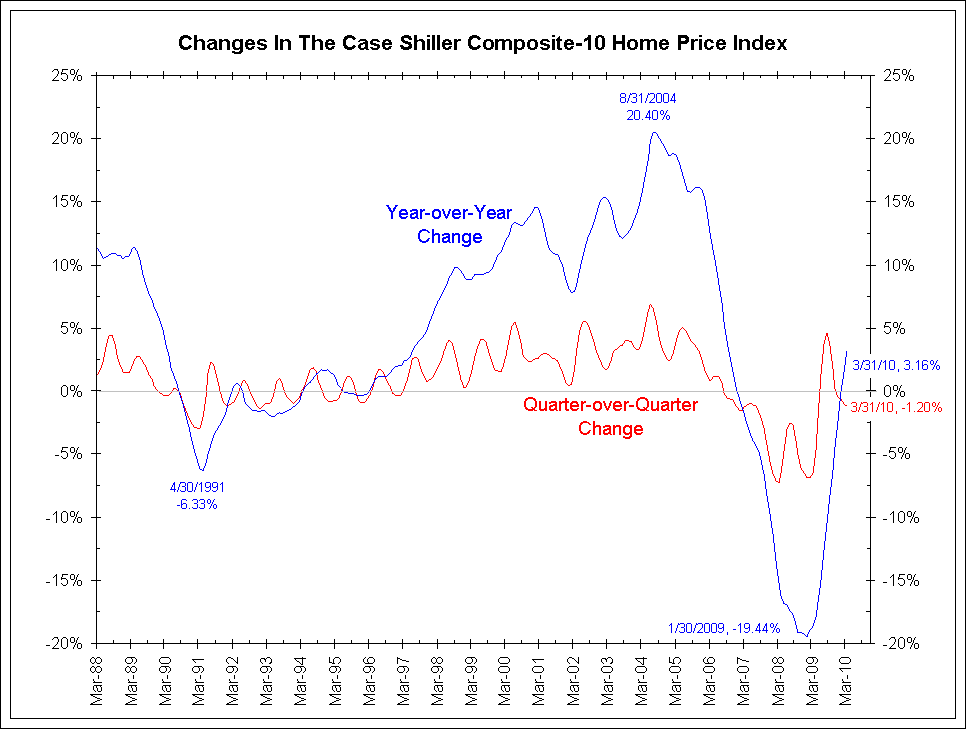
As the chart below shows, the S&P/Case-Shiller Composite-20 Home Price Index bottomed in January 2009 on an annual basis. The quarterly change has once again turned lower, leading some to speculate that home prices may not be out of the woods yet. Now that the first time homebuyer’s credit has expired, what should be expected of home prices in the near future?
<Click on chart for larger image>
In a March 2, 2010 post on home prices, we pointed to the disparity between high-tier house prices and low-tier house prices as evidence that the housing market was being artificially propped up by the government. As we originally wrote:
If housing as a whole were rebounding for reasons other than the [first time home buyers] tax credit, we would not expect to see the large levels of disparity between the high-tier and low-tier markets…Since we do, it suggests that government subsidies, and not a proper equilibrium between supply and demand, caused the Case-Shiller Index to bottom last April.
A Low-Tier Rally
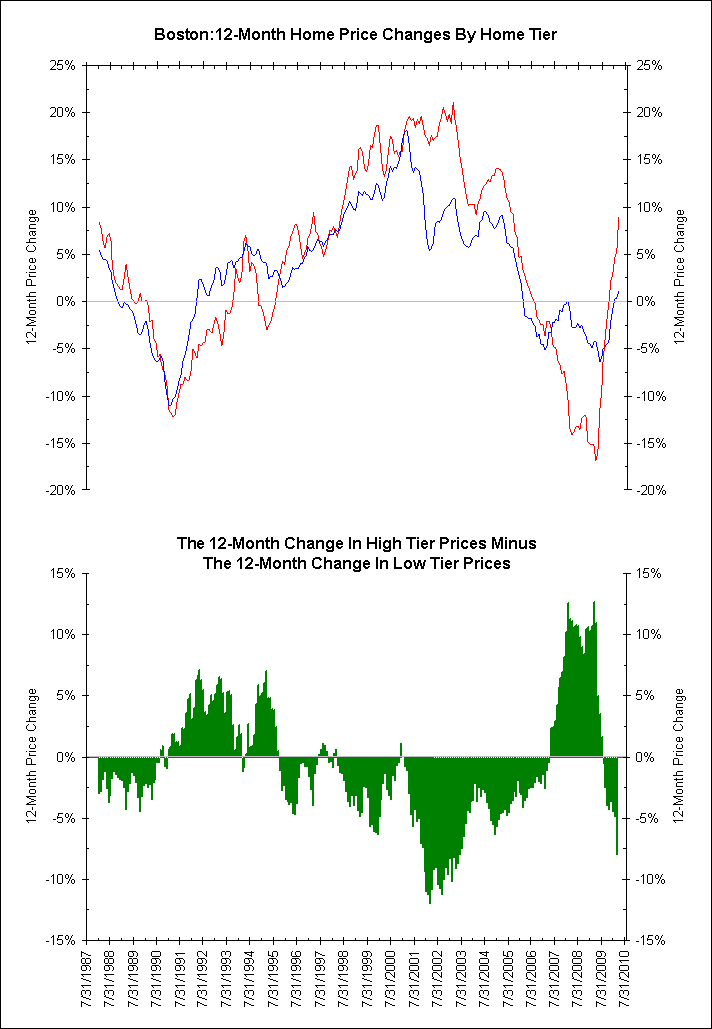
Below are a couple of charts showing the latest update for the Boston and Denver markets. To see similar charts for all 10 markets in the Case Shiller Composite-10 Home Price Index, click here.
<Click on chart for larger image>
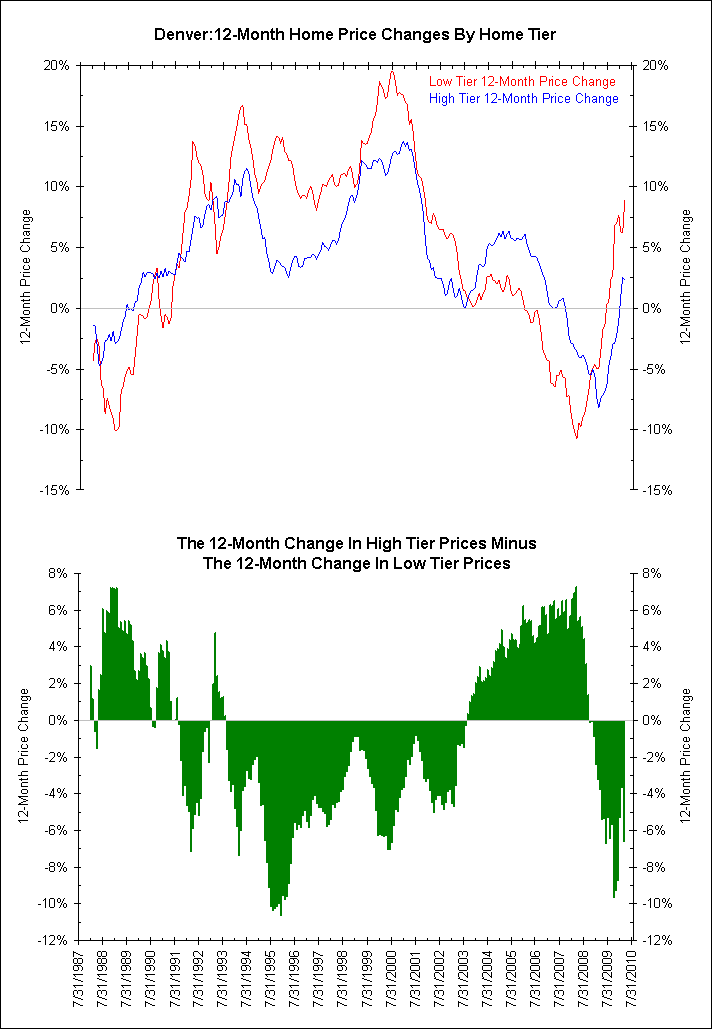
Most housing markets across the country have seen much faster price appreciation in low-tier homes during the life of the homebuyer’s credit (which ended April 30). This could partially be attributed to the fact that low-tier prices fell faster, motivating the creation of the tax credit, and could have been expected to rebound more. However, most think the tax credit did create demand from non-homeowners (who typically rent) and assisted the low-tier price rally.
Although we will have to wait a few months after the April 30 expiration of this tax credit to see its effects, we would expect the low- and high-tier markets to return to a more stable relationship. Because so much demand has already been pulled forward by the tax credit to purchase low-tier priced homes, we look for slower appreciation or even price drops on the low-tier while the high-tier continues to be unaffected. This should serve to slow the appreciation of the overall home price indices.



Tweet
Facebook
Reddit
Digg this!


May 28th, 2010 at 12:27 pm
Barry, the charts did not seem to make it into your post.
May 28th, 2010 at 12:48 pm
Who post this w/o the charts? When you click through you can only get to the pay wall on Jim’s site. To top it off the Case-Shiller charts are everywhere on the web. Seriously frustrating and a poor showing for this normally top-shelf site.
~~~
BR: Doh! My bad — I forgot to update the charts
I’ll fix that before the closing bell rings . . .
May 28th, 2010 at 12:58 pm
“If housing as a whole were rebounding for reasons other than the [first time home buyers] tax credit, we would not expect to see the large levels of disparity between the high-tier and low-tier markets”
Is that statement justified by some data, or is it a guess?
Here, for example, are some reasons you WOULD see that disparity between the high and the low, tax credit or no:
1: The economy is weak. People can’t afford fancier places than they need
2: There was much overbuilding of the lux homes, and relatively little at the low end. (c.f. Supply & Demand)
3: There is no longer the bubble mood that dictated buying as much house as you possibly could because you’d be riding that gravy train up and up and up. Now people are buying houses because they want someplace to live. Not as speculation.
4: Speculation: Not there. No second home demand. Second homes were pretty spiffy.
The point is, it’s kind of difficult to ascribe the relative difference in high end vs low and middle tier homes to JUST that tax credit. Unless you have something more than your say-so to back it up.
May 28th, 2010 at 3:15 pm
Eh, I don’t mean to be snippy, but: “As the chart below shows, the S&P/Case-Shiller Composite-20 Home Price Index bottomed in January 2009 on an annual basis. ” doesn’t appear to be borne out by the chart – the chart appears to show that house prices declined at a reducing rate from January 2009 with them only bottoming in February 2010 – when the blue line crosses the 0%…
May 31st, 2010 at 9:21 am
I agree with your point Yoganmahew, charts like these tend to be a bit misleading. What they’re really saying is that the “rate of decline ‘peaked’ in Jan 09″. It’s like saying something worth $100 falls to $1 in value during the year, a whopping 99% decline, but then getting super excited the next year when the price recovers to $3 and we say it’s up 200%.
Point is, home prices are down (and still under extreme pressure that will continue for at least 2 to 3 more years).