
What Is Driving State Budget Woes? Unemployment
Alternative title: Economic catastrophes are hard . . .
>
>
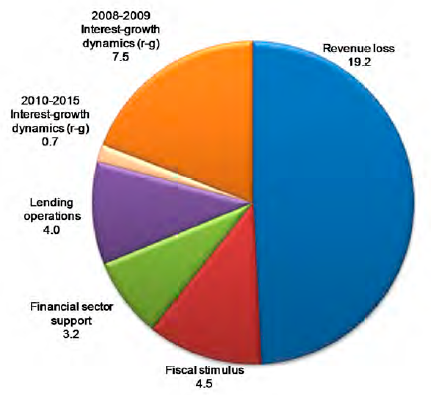
We have been hearing lots of noise lately about state and sovereign deficits, especially from the newly minted deficit hawks in the US. So I took special notice of the Washington Post’s Ezra Klein recent discussions regarding the various States fiscal crises (here and here).
Klein cites Wharton prof Robert Inman, who identifies Unemployment as the single biggest factor impacting States fiscal crises: “The good news from this analysis is that the states’ fiscal crises of 2009 do not appear to be linked to any obvious structural or institutional failures in state finances. It’s the economy.”
Klein distinguished between States’ policies and economic conditions:
“A set of policies that were balancing state budgets in 2004 and 2005 and 2006 and could’ve survived a mild recession but weren’t able to hold the line against a once-in-a-generation economic storm aren’t bad or profligate policies: It’s just hard to endure economic catastrophes, and you wouldn’t necessarily want to orient your economic policy around long-tail events. A pension program that was started in the early 1900s and that’s worked pretty well but will run a temporary deficit when an uncommonly large generation retires isn’t a poorly designed pension program.”
There is additional evidence to back this up: An IMF report analyzing sovereign deficits, and an NBER Working Paper titled States in Fiscal Distress.
The bottom line is that deficits reflect both government policy AND economic conditions. You cannot intelligently analyze or criticism one without recognizing the impact of the other . . .
>
Sources:
Unemployment, not budget practices, to blame for state woes
Ezra Klein
Washington Post, June 22, 2010
http://voices.washingtonpost.com/ezra-klein/2010/06/unemployment_not_budget_practi.html
States in Fiscal Distress
Robert P. Inman
NBER Working Paper No. 16086
June 2010
http://papers.nber.org/papers/w16086
Budget deficits reflect economic conditions, not just government policy
Ezra Klein
Washington Post, June 22, 2010
http://voices.washingtonpost.com/ezra-klein/2010/06/budget_deficits_reflect_econom.html
Navigating the Fiscal Challenges Ahead
Fiscal Affairs Department, IMF, MAY 14, 2010
http://www.imf.org/external/pubs/ft/fm/2010/fm1001.pdf



Tweet
Facebook
Reddit
Digg this!


June 23rd, 2010 at 12:22 pm
Unemployment? Really? Are you sure? Don’t tell Mish, according to him it’s public sector employees and unions who are the cause and are destroying the states and this country with their greed and, blah blah blah blah.
June 23rd, 2010 at 12:30 pm
No kidding, Thor. Mish is talking his book with this tripe. If you’d listen to him, you’d think all the world’s problems were as a result of public union “parasites”, as he calls them. If HE can make money shorting the market while we go into a Depression, it’s all good for HIM. I hope he’s got a good security system around his house.
June 23rd, 2010 at 12:36 pm
I see “19.5 fuzzies” of extra spending and “19.2 fuzzies” of lost income.
How would the message change if I merged all of the spending into oe block named “Spending Increase” and divided the one called “Revenue Loss” into several categories like “Sales Tax”, “Propetry Tax”, “Corporate Tax”, “Income Tax”,….?
Also, is “interest-growth dynamics” a euphamism for the increasing cost of paying for yesterday’s projects with today’s revenues?
June 23rd, 2010 at 12:36 pm
The biggest slice on the chart reads revenue loss. How so the budget where higher revenues are projected is not the problem? And how temporary are those pension system shortfalls? It looks like they will stretch till bankruptcy.
June 23rd, 2010 at 12:38 pm
no shit BR-
what’s your point? Let’s look at it this way-
recession- private sector company loses shit loads of sales- revenue doesn’t cover expenses-
mass firings- because that is the biggest expense- low and behold- back in the black-
that’s why local governments have been having furloughs and cutting employees hours- trying to trim expenses-
if it goes on long enough- you’ll see RIF’s- not too tough to understand
June 23rd, 2010 at 12:43 pm
Ahab,
There is a difference between structural problems of high fixed costs — think CA, IL, MI & NJ versus a cliff dive in revenue as employment, income and sales plummet.
FL, NV and AZ had massive declines in revenue but not as high of a cost structure — you can argue they are less screwed than the hi-fixed-cost states
Peter Boockvar mentioned the CDS spreads as a way to gauge the fiscal health of States:
ILL at 313 bps, CA at 298, NJ at 246, NY at 245, NV at 206, MA at 130, WI at 126,Texas at 87, Maryland at 69 — its a function of market confidence in debt levels and structure
June 23rd, 2010 at 12:56 pm
I would also advise many of those Mish-types – “be careful what you wish for.”
Mish, with his uber focus on his pet straw men is fast becoming the “Lou Dobbs” of the financial blogosphere.
June 23rd, 2010 at 12:59 pm
A few questions:
1. So, there isn’t a huge deficit in the state public pension funds of $2 trillion?
2. Hasn’t cumulative state and municipal debt as a % of US GDP been climbing over time? I believe total state/muni debt as a % of GDP is up to 22% now.
3. “…you wouldn’t necessarily want to orient your economic policy around long-tail events.” These long tail events seem to happen much more often than people expect. Basing your spending policies on the years 2004, 2005, and 2006 seems absurd. Those years are conveniently sandwiched between 2 crises which I guess we should call “long tail events”?
June 23rd, 2010 at 1:14 pm
A pension program that was started in the early 1900s and that’s worked pretty well but will run a temporary deficit when an uncommonly large generation retires isn’t a poorly designed pension program.”
Because it’s not like they had FORTY YEARS to prepare for this! Oh wait, THEY DID!
If you see an uncommonly large group of future retirees in the system why aren’t you taking from them to pay for the thing? Probably because they are the same ones running it
June 23rd, 2010 at 1:16 pm
here’s a question-
why are there public unions? I worked at the IRS years ago- sure there was a union- the National Treasury Employees union- but I never understood why-
working conditions were pretty boring- but is that why you collectivize? Because you’re bored? Seriously- to get fired from a government job is a pretty incredible event- as it almost never happens. So they have the job security thing going for them. But what of pay and retirement benefits?
should the taxpayers be subjected to the lobbying efforts of public unions- that guarantee the victory at the ballot box- in exchange for generous pay and very generous retirement benefits-
maybe we should all work for the government
June 23rd, 2010 at 1:26 pm
Interesting fact: California has the 2nd fewest number of public employees per capita.
“As of 2008, the last year for which comparisons are available, California had 108 state employees for every 10,000 state residents (see chart). That has hardly changed in a decade and is far leaner than the average (149 state workers per 10,000 residents) of America’s other states. Only Florida and Illinois have fewer state workers relative to population. Even if employees in local government, such as teachers, are added, California’s public workforce is still among the nine leanest.”
http://www.economist.com/node/16015487?story_id=16015487
June 23rd, 2010 at 1:32 pm
What ? You mean to say the gummint isn’t to blame for evuh-thang?
What sort of lib-uh-rel claptrap you peddlin here, boy ?
June 23rd, 2010 at 1:32 pm
@ahab: It’s a fair question but Mish’s (and others’) uber-focus on public unions is as the scourge of the earth is ludicrous, and downright repugnant. Why not tackling what really ails us? Answer: Because going after the weaker (or weakest) among us (the low hanging fruit) is much more fruitful and enjoyable for some. I don’t think it’s an admirable trait to revel in the misery of our fellow citizens.
June 23rd, 2010 at 1:34 pm
It looks like f411 and I agree on something else. What’s this world coming too? ;-)
June 23rd, 2010 at 1:34 pm
“…I hope he’s got a good security system around his house.”
nice…sounds like Mish is spot on about union thugs
June 23rd, 2010 at 1:38 pm
It’s mind blowing that DC keeps playing games with unemployment extensions as well as not passing any real significant jobs bill. It’s like they want to be driven out of office with pitchforks and torches.
Ahab: One of the advantages of a union is that management only has to negotiate pay scale (or complaints, etc) with one small group of employees or its representatives which leads to some stability and parity within the work force. It’s not perfect, but the alternatives tend to be worse.
June 23rd, 2010 at 1:40 pm
Sounds like someday Klein may work his way around to an analysis of credit bubbles…
June 23rd, 2010 at 1:41 pm
@mucemgd: I’m not a “union thug”, douchebag. Never been in one and don’t know anyone in one. I’m just someone who thinks there are larger problems and that if we put more regular people out of work like Mish seemingly is rooting for, he should be careful what he wishes for. We all should. Reveling in the misery of others isn’t an admirable trait. It’s borderline nihilistic. Why not root and fight against some of the systemic issues that truly ail us – namely those in the elite class that have failed us time and again? Oh, that’s right. Because it’s far easier to go after your fellow citizen in the hoi polloi but it’s also more cowardly, IMO.
June 23rd, 2010 at 1:43 pm
And yet virtually nobody rails against a similar “agency” problem when it comes to absurd executive pay. Stockholm Syndrome anyone? Oh, but that’s just “the free market at work”. Please. Go the fuck away.
June 23rd, 2010 at 1:49 pm
Go Manny.
June 23rd, 2010 at 1:51 pm
@MA: I’ve been a tad cranky the past two days. Is it showing?
June 23rd, 2010 at 1:56 pm
manny-
executive pay sucks my man- way over paid- but look at it this way-
I met with a client who is a chef at PF Changs- I did a bit of checking on Yahoo Finace- and it tells me that there are 26,000 employees. Now that’s a shit load of employess. Let’s assume average salary of only $10,000-
the math tells me that = $260,000,000
if they can squeeze everyone for a $1,000- that’s $26,000,000. That’s where all the money goes- employees-
sure there may be outsize bonuses and pay for executive- but how much can they squeeze there- (excluding the GS’s and MS’s of the world of course)
June 23rd, 2010 at 1:58 pm
Manny, just a bit – but like with Ahab, I love when you get angry :-)
Agree with you though – this is a much bigger problem than just public employee unions. Let’s not forget that it was the private sector (the banks) that got us into this mess in the first place, not the unions.
June 23rd, 2010 at 2:00 pm
@ahab: Executive pay’s gotta come from somewhere. Where does it come from? Employees and shareholder pockets. That’s where. To excuse recent stratospheric rise in executive pay, while employee pay has stagnated over the past 30 years and think there’s no problem there while trying to extract MORE concessions time and time again from average working folk every time we have a crisis is downright repugnant if you ask me. If I’m in a union (and I’m not nor will I ever be, I’m sure), I tell them to “fuck off” until I see the elite’s making a similar relative sacrifice. Real leadership starts at the top. The people will follow if they see real leaders lead. That’s what real “leaders” would do if we had them. Clearly, we don’t.
June 23rd, 2010 at 2:02 pm
@Thor: I tend to root for “little guy” or the “underdog”, if you will. Comes from my upbringing. I saw how hard my Dad struggled to support our family while growing up and how he was discarded when his company couldn’t “use him” anymore. I identify far more with that than some of the cowards who empathize with the other side, while hammering those just trying to get by. It clearly bothers me.
June 23rd, 2010 at 2:04 pm
Dow @ 1:38
makes sense-
but- keep in mind- public unions are a recent phenomena- the private unions collectivized for fair working conditions and pay- as they were being abused by the capitalists-
not sure the dynamic behind the public unions because they already had one of the most secure jobs to be found- I don’t think “the man” was keeping them down
June 23rd, 2010 at 2:07 pm
@ahab: I don’t necessarily think that either but that’s not my point. See above for my point. The whole issue is so small relative to the other FAR bigger issues that we should be focusing on. It’s basically a useful distraction for those who somehow revel in hammering their fellow citizen when there are far more malignant and repugnant forces at work that ails our society and country.
June 23rd, 2010 at 2:09 pm
Regarding unions; If Corporations should not be considered individuals and should not be able to spend money on elections or lobbying for their positions, are Unions any different?
In fighting against those in the elite class, are you saying they too have too much power? If so, where should this power reside? Who are those in this elite class?
June 23rd, 2010 at 2:10 pm
Manny & Ahab – Also to clarify, I’m not defending public unions here, I think there are serious issues with pay and benefits – just not buying the Tea Party talking points about their causing the destruction of the nation.
June 23rd, 2010 at 2:12 pm
@Rescission: Do I have to spell that out for you? Really? Hhhmmm, let’s see – the sociopaths, I mean “leaders” of Wall Street, Politicians, Big Corporations………..
Are they our “best & brightest”? If so, how would you define that? There was a time when our community leaders looked out for things other than themselves and their own interests. Would it be too much to ask for a little less greed and decadence on their part for the greater good? Just a little?
June 23rd, 2010 at 2:14 pm
My point as well, Thor. In fact, I’ve gotten into discussions about this very topic taking the OTHER side, but it’s not the primary item that ails us and certainly doesn’t justify all the focus that Mish now gives it.
Again, Mish = “Lou Dobbs of the financial blogosphere”. Credibility eroding quickly.
June 23rd, 2010 at 2:15 pm
The various states of the Union are operating under many of the same conditions as say, Greece– ridiculously low retirement ages at generous pensions and generous benefits while working that mean structural deficits abound. Anyone that says this is just a function of economic performance (i.e., revenue decreases due to recession) has their head in the sand. If state and local governments had to carry their pension obligations on a balance sheet like a public corporation most would be insolvent, no matter what is the state of the economy.
Should public-sector unions exist? No. Or, at least that’s the view that prevailed until the 80′s or so, both with states and federal government workers. The reason is, particularly for state and local unions, the inherent conflict of interest with allowing a public sector union to lobby on behalf of its members when those same members have a collectively huge voice in deciding who their representatives will be. Generally the largest and most powerful of these unions are the teacher’s unions. That is certainly the case in my state, where the head of the teacher’s union is generally considered to be the most powerful person in the state as to what gets funded and what doesn’t.
Look at the increase in state spending over the fat years, and there you will find the source of their immediate fiscal woes (separable from the pension/employee woes). Virtually every state in the union ramped up spending, usually by amounts far in excess of economic performance, partly because the real estate boom made them feel rich. Now it’s time to face the music. But that wont’ happen, I’m sure. Uncle sugar will ride to the rescue. We’re all Keynesians now. Well, except BR.
June 23rd, 2010 at 2:17 pm
Good question. How would you fix this problem? Who defines the greater good?
What country does not run on greed? How do you stop these “leaders”?
June 23rd, 2010 at 2:18 pm
Rescission-
I’d like to see neither able to lobby- but we know where the SCOTUS stands
manny/thor-
just looking at where the money is-
if the revenues decline a company is going to let people go or force wage concessions- so the company can survive the storm- if the executives are in any way tied to stock incentives- then their pay is taking a hit-
the GS’s and MS’s of the world are another matter entirely
June 23rd, 2010 at 2:20 pm
Manny,
Tons of people rail at excessive executive compensation. The thing is…the media make sure they’re either not heard, or ridiculed, labeled as fanatics, extreme leftists, “engaging in class warfare” etc., etc.
A revealing example: Dude from the Center Of Corporate Governance ( or some name similar, I don’t recall exactly) was on CNN a couple of months ago. He was explaining in plain English, with facts, the increasing disparity in wealth and income between the top 1% and the rest of us.
Care to guess what the dumb biatch of an anchor said in a very condescending tone:” So, you’re saying we should soak the rich? That’s not very American, no?”
Alas, the dude was so taken aback that he didn’t have the presence to shoot back: “No sweetpea..we should keep soaking the poor even more. Happy now?”
Let’s face it: the moral depravity, servility toward the elites and slothfulness of the American mainstream media know no boundaries. And there is a very good set of reasons for that…like 5 million dollars reasons.
That is the exorbitant advance that John Heilemann and Mark Halperin will collect to write the 2012 version of their vapid and sleazy opus “Game Change”.
(Since you appreciate good satire, read this devastating critique:
http://www.salon.com/news/opinion/glenn_greenwald/2010/01/11/halperin/index.htm )
It goes without saying that other colleagues haven’t failed to take note of this small fortune. Plus, the fact is, no one could write such a book without unfettered access to the politico-financial elite. Therefore, it’ll be the day when any journalist (or what passes for it nowadays) who hope to hit a big financial score (who wouldn’t?) starts asking even mildly hard questions to the powerful, political or financial. For example, Sorkin could never have written his latest book by inserting an expose on executive compensation, couldn’t he?
So, we got a trifecta: regulatory, political and journalistic capture in this good ol’ US of A.
Ain’t life totally awesome? :-\
June 23rd, 2010 at 2:20 pm
@ahab: Really? We’ve seen SEVERAL examples over the past few decades where executives made out like bandits when their stock did well (in a relative UP market anyway, so hard to know how much it was due to their “expertise”) and when their stock did nothing (see backdating and other corporate suite shenanigans with the help of corporate comp consultants, board room buddies, and other sychophants). It’s been gamed the whole way so they win all the time, while the worker gets the shaft in up AND down times. You’re not going to try to excuse that, are you?
June 23rd, 2010 at 2:22 pm
Exactly, FrancoisT!!! Hallelujah! By God, someone here at TBP understands my angst today.
June 23rd, 2010 at 2:25 pm
@Francois: And you’re right – plenty of people DO rail against executive comp but they are either: (1) ignored as “nobodies” by the media and those in charge, (2) ridiculed by the media and those in charge, (3) have thrown distraction grenades at them like the one you mention above, while the citzenry looks on and applauds……..until it is they that gets thrown to the lions next.
June 23rd, 2010 at 2:31 pm
Regarding unions:
If unions are the problem then why is it that the US is going broke and Canada isn’t? Canada has a lot more union participation than the US. Let’s face it. This is about overspending and debt. The media wants to protect that elephant in the room because debt is the golden goose and they don’t want people to slaughter the thing
June 23rd, 2010 at 2:32 pm
Some “common” sense from Common Man. Muchos gracias. ;-)
June 23rd, 2010 at 2:34 pm
More competition is a fix. Corporate monopolies aren’t healthy because they create the things you guys are ranting about. Why is it that no one ever bitches about how much Steve Jobs makes?
The scary part is that once we get to a few Corporate monopolies with lots of power, people won’t let that stand, and they end up taking that power away by giving it to the state, which is worse.
June 23rd, 2010 at 2:36 pm
Amen to the Common Man.
While I don’t like unions, they aren’t the real problem. But how Obama protected them and screwed the bondholders of Chrysler was criminal.
June 23rd, 2010 at 2:37 pm
tc-
your comment yesterday- can’t even remember the thread- had me in stitches-
paraphrasing- “BR- have you sir, now, or ever been a non-keynesian?”
classic stuff there-
manny-
dude- my point is-
that a company is going to cut expenses- by cutting pay of its workers or by firing them-the executive staff is miniscule in comparison-
sure- the executive staff is probably overpaid- maybe they could cut their pay as a symbolic gesture- but nothing will compare to cutting expenses by eliminating thousands of workers-
capitalism in action- for good or bad
June 23rd, 2010 at 2:39 pm
Because Steve Jobs is CEO of a company of a truly successful business right now. I have no problems with what he makes but for the few Steve Jobs’ that are out there, there are MANY more mediocre to just downright bad executives that are raking (looting their own companies, in reality) in the dough while their contribution has very little (if any) direct relevance to the the company’s performance.
June 23rd, 2010 at 2:40 pm
Let’s not forget that many companies who have to cut employees also have their top brass take some big hits too.
I know its not everyone, but we have seen companies with executives even take basically no pay or no bonus when they have to slash payroll. Having said that, I am not justifying the other side.
June 23rd, 2010 at 2:42 pm
Manny, I agree. Glad to know you aren’t after all the CEO’s. There are some real shitty CEO’s. I have never understood how and why a CEO can still get huge bonuses when his/her company is losing money. It’s ridiculous.
June 23rd, 2010 at 2:42 pm
@ahab: Correction: “crony capitalism in action – for mostly bad”. There. Fixed it for you. ;-)
June 23rd, 2010 at 2:44 pm
@Rescission: Not at all. I’m FOR the truly innovative and brilliant leaders to make as much money as they can make but we see far too much of the other (read: looting the company’s treasury by empty suits) that not enough people criticize, in comparison to those many more who love to pile on the low hanging fruit (e.g. unions and average workers). It’s cowardice in action.
June 23rd, 2010 at 3:01 pm
To clarify an earlier thought: no shit.
Unemployment and the economic downturn have deprived states of revenues which makes their current spending unsustainable.
What is the most unsustainable parts of their budgets are the guaranteed payments to current and future retirees which are based on faulty assumptions about investment returns.
Everything else can be cut, except for these guaranteed payments. Which, in most cases, are high enough to crowd out most of the rest of the state and local budgets.
You folks may not like to hear that, but there you go. So the question is, do the states raise taxes on those who still have jobs to pay these guaranteed benefits? Do the states get money from the Federal government in order to cover the budget gaps now in the hopes that the economy turns up decisively?
Because these are guaranteed benefits.
It doesn’t really matter how you feel about the ‘little guy’. I’m a ‘little guy’ and over the past 2 years my property taxes have gone up 16%. Makes me feel all warm inside to know I’m helping the local government retirees get free hc for the rest of their lives.
Mish’s point is that you can’t afford to keep paying folks these types of wages and benefits absent a growing economy that’s based on output, not financial slight of hand. The fact that it’s the unions who refuse to see the problem is what drives the most vitriolic of his posts.
June 23rd, 2010 at 3:07 pm
“The bottom line is that deficits reflect both government policy AND economic conditions.”
Who said otherwise?
What Klein wants us to believe is once economic conditions improve everything will be hunky dory, and the way to improve economic conditions is for the government to borrow and spend a lot more moolah.
This quote by Frédéric Bastiat is appropriate:
“There is only one difference between a bad economist and a good one: the bad economist confines himself to the visible effect; the good economist takes into account both the effect that can be seen and those effects that must be foreseen.”
Folks like Klein and Krugman are examples of the “bad economist”. They’re clueless about the future impact of deficit spending and the entitlement mentality they advocate.
June 23rd, 2010 at 3:31 pm
Bingo!! If I may add to the faulty (“grotesque” would be a more appropriate word here) assumptions factor, there is this little thingie called systematic funding.
Example: Nebraska is one of the few states that pay up in the pension fund EVERY YEAR, no freakin’ excuses…bitches!! The law say so: actuaries for the Pension Plan calculate the money needed to fund current and future obligations on a 30 year horizon and present the bill (pun intended) to the Legislature every start of the year.
Here’s the delicious part: Before allocating one n’gwee, zloty or rial anywhere else, the Pension Plan is funded, no kicking the can down the road or “we’ve got so many competing priorities blah blah blah!”
Pay up now! Zat iz dee law!
Would anyone faint of an emotional shock if told the pension obligations are DECREASING in Nebraska?
Didn’t think so!
Mish is right on the first part and wrong on the second one.
A growing economy based on output means a tremendous and overdue downsizing of the financial sector. These asshats need to be brought into submission to the real economy…period! Of course, given the totally dysfunctional political system we’ve got, that’s easier said than done. But it must be done.
The unions refuse to discuss anything for the same reason banksters do. The Unions reasoning is pretty simple:
“Here are some rear echelon mother fuckers who almost destroyed the whole economy and not only did they got bailed out with OUR money, but no one forced them to any concessions. Oh! And they’re making even more money than before. And WE should concede anything? WTF??”
Kind of hard to argue with that, isn’t it? If the Barrack Attack and Turbo Tax Timmy had grabbed the banksters by the kahunas, make them kneel while gently asking them to sing “The Internationale” and “We shall overcome” (no false notes guys, ok?) only to immediately after give them the proverbial pen and say:”Sign here!” this new and improved laws on executive compensation…well…who knows? At the very least, a sense of justice, albeit imperfect would have given the higher ground to the States and federal govermins to extract some concessions from the unions.
Absent that, if I was a union boss, I would be totally adamant in refusing any concession whatsoever. Doing otherwise would guarantee a prompt demise by a mob of rightly outraged members.
June 23rd, 2010 at 3:37 pm
Francois,
I was only addressing the public sector aspect of this debacle.
You’ll not find me defending Obama, Geithner, Banksters, Wall Street….any of them.
June 23rd, 2010 at 3:39 pm
Manny,
Here is a great essay by Yves Smith on the media and the Masters of the Financial Universe. Very instructive indeed!
http://bit.ly/9DN8iA
Original URL:
http://www.nakedcapitalism.com/2009/10/msm-reporting-as-propaganda-no-one-minds-our-new-financial-lords-and-masters-edition.html
June 23rd, 2010 at 3:43 pm
Francois – You’re on a roll today – awesome stuff man!
June 23rd, 2010 at 3:48 pm
@kstills: My main beef with Lou Mish is that far too many of his posts are disproportionately about the public unions relative to the other far bigger problems (and people) that deserve far more of his (and our) ire and attention. I agree that those in the public unions also need to grow up and realize that they’ll need to sacrifice as well (the money ain’t there and won’t be there for retirement either), but we all need to be adults and face reality about a lot of things and nobody is setting the tone, being honest, or asking that from us in positions of leadership. Real leaders lead by example Where is that today in any of our public and private insitutions? It seems that’s the real issue here – honesty and integrity get displaced for passing the buck and can kicking to the next person or generation.
June 23rd, 2010 at 3:50 pm
Bingo again, Francois. The Unions are merely following the lead of the even BIGGER parasite – Wall Street. Their feeling is “so WE bail THEM out for nearly destroying our country and economy, but then WE are asked to then also sacrifice AGAIN with salary and pension cuts? Please. Hard to blame them. The real “me-first-last-always” parasites on Wall Street have shown everyone the way in this country, the wrong way, and that includes the public unions.
June 23rd, 2010 at 3:59 pm
A growing economy based on output means a tremendous and overdue downsizing of the financial sector.
what?????
June 23rd, 2010 at 4:02 pm
@Mannwich
I guess I read Mish differently.
He’s consistently called for shared pain. His global recipe for growht appears to be to let the markets and prices fall to fair value, then rebuild with a productive economy.
I’ll grant that he seems to have an unhealthy dislike for the public sector, but as he’s said on many occasions, not one member of government has to be laid off ever.
All they have to do is recognize reality and accept pay and benefit cuts across the board.
I don’t wish unemployment on anyone. And as Fransois said, if we all shared the pain, the pain would be easier for us all to bear. But that pain has fallen unequally across the economic spectrum, and nowhere is that easier to see then in the sales of luxury goods.
I think you and I share more in common on this issue then we disagree.
June 23rd, 2010 at 4:04 pm
@ahab: I think he means that the financial services sector is still too big and basically a parasitic drag on the real economy. It still needs to shrink considerably for real innovation (not fake paper products) and the real economy to grow again and thrive.
June 23rd, 2010 at 4:05 pm
@KStills: Yes, but now that Wall Street has been bailed out, there will be no shared pain. Only pain for the average worker – AGAIN. That’s why they’re digging their heels in. They’ve had enough and I don’t blame them.
June 23rd, 2010 at 4:06 pm
Steve Jobs apparently takes no salary.
CEO Compensation
#1 Steven P Jobs
June 23rd, 2010 at 4:07 pm
@KStills: And you’re probably right about that last point. We probably agree philosophically more than we disagree. For the record – I’ve been vehemently against the Bush and Obama administration’s rescue of Wall Street from Day 1 because I knew then there would be no concessions from that group. It’s simply not in their genetic makeup.
June 23rd, 2010 at 4:07 pm
Well, there you go, dss.
June 23rd, 2010 at 4:15 pm
manny-
consider- re FrancoisT’s comment-
the growth we’ve had has been based on debt fueled consumption- currently we have credit contraction-banks aren’t lending as it is- and people aren’t borrowing-
how does reducing the size of financial sector do anything to resume growth on a system based on credit consumption?
someone better pull out a slide rule and proof it for me
June 23rd, 2010 at 4:19 pm
@ahab: I think reducing the size relative to the rest of the economy is paramount, actually. Do we need all of this derivative nonsense and other esoteric financial instruments for the real economy to thrive? Call me highly skeptical that we do. Maybe I’m wrong but how exactly do those things add real value to the real economy? Don’t give me the patented “the provide liquidity” clap trap either. I ain’t buying it.
June 23rd, 2010 at 4:28 pm
I believe I have tried to say here to you “we have a credit crisis, no we have a housing crisis” types a long time ago, “that no we have a jobs problem”. GWB killed the job engine in this country.
I don’t see Obama doing one damn thing to help. At least he knows the word “jobs” unlike GWB, but knowing the word hasn’t helped.
June 23rd, 2010 at 4:30 pm
Just once, I’d like to see folks go after the Private Equity firms who have been asset stripping manufacturing companies in the United States.
June 23rd, 2010 at 4:33 pm
With this talk about the banks, and getting back to a “real” economy. Does anyone have any idea how much smaller our economy would actually be if the share of our GDP that the banks account for reverted more to a historical means?
Not saying this is a reason to keep them around as they are today – but we’ve lost so much manufacturing, and so much of our economy has been replaced by all these complicated financial shenanigans, how much of our economy is “real” anymore?
June 23rd, 2010 at 4:35 pm
Amen Dow. Amen brother (or sister). Speaking of “parasites”. They’re arguably the biggest most repugnant ones of them all.
June 23rd, 2010 at 4:38 pm
manny-
FrancoisT’s comment implies that growth will come from reducing the financial sector- when that has been the model that has been used to get us where we are- growth at all costs- debt fueled consumption-
so . . .the comment made no sense to me-
in fact I would think the inverse would be true- a smaller financial sector would lead to lower growth- a more sustainable model possibly-
in any event- think what you want
June 23rd, 2010 at 4:40 pm
@ahab,
The financial sector as a % of GDP had risen to about 8.3% from about 4% in the 60′s.
The Future of the Financial Industry
We all know that much of that growth was built on a house of cards and except for the privileged few, we will all be paying the price for the phony growth.
Are you suggesting that we grow the financial industry to grow the economy? More investment bankers? More hedge fund managers? More derivatives salesmen?
June 23rd, 2010 at 4:41 pm
Wow, late to the party (too busy being a parasite). Good stuff from Manny and FrancoisT!
Ahab, I also think you’re misreading FrancoisT’s point about the financial sector. I think he’s arguing for a return to the sanity of a real economy (remember the one that actually makes stuff and adds real value?) and take the financial sector down a few pegs to the supporting role it should have in a more balanced economy.
@Thor at 4:33 pm: the sad truth. That’s why they have the world by the balls. The heart of the problem is misallocation of capital into the credit (derivatives) bubble/casino. When you think about the WASTE of channeling all that capital into b.s. paper instead of value investing, kind of makes you sick, doesn’t it?
June 23rd, 2010 at 4:42 pm
I’m surprised none of you are cheerleading all the Census workers as providing the new employment which will save the states’ finances.
I read some of Mish’s recent entries for the first time (thanks to your mentioning him here) and they made sense to me. Surely it’s not the only factor, but don’t discount the responsibility borne by public sector pension obligations on state finances.
June 23rd, 2010 at 4:46 pm
We’re all “parasites” now, Transor. ;-)
That’s how I read Francois’ comment point as well. And, yes, it is indeed sickening and disheartening to think about. Sorry for all the posts. I guess I’ve woken up a bit today. Sorry BR. I think I stayed on-topic though tangentially. ;-)
I just didn’t want us to forget about the main problem that got us to where we are today, as many seem to be conveniently doing. The public unions are a problem, for sure, but not even close to THE main problem. Let’s not forget about that.
June 23rd, 2010 at 4:48 pm
Tranzor – yes is does, very much. When you think about all the money that has been poured into the financial services industry, given the state of our infrastructure, education, etc, it just makes your head spin. Will it ever end? Or are we going to have to literally collapse and build it all back up from the ashes?
June 23rd, 2010 at 4:50 pm
fuck it-
everyone you can all rant and fucking rave if you want- but if you can’t latch onto my point-
ask me if I give a shit?
I didn’t buy FracoisT’s statment- because it appeared ilogical- doesn’t mean I want more derivatives salesmen-
I like the idea of a smaller financial sector because it may fit into a more sustainable growth model- a desirable outcome-
that’s all I have to say on the matter- if you want to read other shit into what I am saying-
knock yourself out
June 23rd, 2010 at 4:56 pm
@Ahab,
Since a great deal of the “economic growth” was based upon fraud which caused rising home prices, and debt creation, I don’t see how growing the financial part of our economy makes any sense. It was phony growth based upon the greater fool theory, except some people in the financial services sector were able to make and keep their pay.
Like most industries in a deflationary economy, financial services must shrink and it should shrink a great deal more than most industries because the gains were based upon fraudulent conditions.
June 23rd, 2010 at 5:00 pm
@dss – Look at his total compensation – $646 million. Which is as it should be, based solely on performance baby. We sold our small company a few years ago to a big bank and I was negotiating my compensation agreement. I asked to be paid no salary but a percentage of profit. They said “no way” and insisted on salary and arbitrary bonus. That’s what’s wrong with corporate culture. Executives should be paid like owners, then they would act like them. Wall Street has a whole host of bad issues, but they do get one thing right. They eat what they kill and people who work their don’t get entitlement compensation plans. (not defending Wall Street here).
June 23rd, 2010 at 5:07 pm
@Rescission: Well, that’s where you and I disagree. Plenty of Wall Street types basically stole their millions off of booked “profits” during this latest fake period that turned out to be a complete mirage. Did any of them step up to pay back any of those ill gotten gains?
They “eat what they kill” alright. They’ve “eaten” the American markets, economy and its people. I hope they’re “full” now but I doubt it.
June 23rd, 2010 at 5:07 pm
@manny – Lehman failed, Bear Stearns is gone, Merrill Lynch was sold off in distress, Goldman laid off a ton of people, as did Morgan Stanley. The big 5 Wall Street firms went to 2, only a remnant of what used to be. Hard to say that “Wall Street was bailed out”. Now the big Banks is another story. Banks should be allowed to fail, so newer, smarter and smaller ones can replace them. Unleash the entrepreneurs!!!!
June 23rd, 2010 at 5:09 pm
OK, so you’re telling me that Stan O’Neil, Fuldie, and others at the top paid back those ill gotten gains they made, excuse me took, during that period? The rank and file took it on the chin, for sure, but what about the big dogs? I think not.
June 23rd, 2010 at 5:10 pm
“@Mannwich
I guess I read Mish differently.
He’s consistently called for shared pain. His global recipe for growht appears to be to let the markets and prices fall to fair value, then rebuild with a productive economy.
I’ll grant that he seems to have an unhealthy dislike for the public sector, but as he’s said on many occasions, not one member of government has to be laid off ever.
All they have to do is recognize reality and accept pay and benefit cuts across the board.
I don’t wish unemployment on anyone. And as Fransois said, if we all shared the pain, the pain would be easier for us all to bear. But that pain has fallen unequally across the economic spectrum, and nowhere is that easier to see then in the sales of luxury goods. ”
Agreed
This has been my take on Mishs position since I’ve been reading his blog. He enjoys being controversial with the name calling i.e. “thugs, parasites, etc…” but the premise is sound imo.
June 23rd, 2010 at 5:10 pm
And I’m with you on allowing them to fail. It’s a necessary requirement for better people to step forward and take over and for the economy to recover.
June 23rd, 2010 at 5:11 pm
Agreed. It’s hard to justify much of Wall Street’s value to society beyond investment banking and deployment of capital.
June 23rd, 2010 at 5:13 pm
nucemgd -
Hrmm, I see Mish as nothing more than an opportunist who is using his increasingly shrill pulpit to incite class warfare.
Different strokes I guess. . .
June 23rd, 2010 at 5:18 pm
You can rant about the unfairness of executive compensation levels till the cows come home, but non-shareholders and people outside of the corporation have no control over executive comp.
OTOH, the pay for public employee salaries & benefits comes directly from the taxpayers pockets. With so many people un/underemployed these days, taxpayers are starting to look closely at where their money is going. And a lot of us don’t like the deals that the public unions have locked into place, with the quid pro quo that politicians will okay great public union pay & benefits with the understanding that the union will rally the votes come election time for said politicians and/or party.
Furthermore, private workers rarely are able to get the same level of benefits in private industry as public workers do which is yet another point of unfairness.
My personal view is that either EVERYONE in the USA should be allowed to join a union (even a single person) or no one should be. Wouldn’t it be great if some computer programmers chose to join the Teamsters and after management offshored their jobs, the company found a bunch of burley Teamsters blocking their doors and harassing everyone going into the company? :)
June 23rd, 2010 at 5:28 pm
Ahab,
Sorry for the late reply. What I meant is this: The financial sector has captured an ever growing part of the private profits in this country without having much to show for it.
Let’s just remember this crucial set of facts:
In other words, compensation at these financial institutions dwarfed their total real profits for the last decade!! Is it surprising they had to be bailed out, despite their stupid pretension that they didn’t need the money?
Which begs the logical question: “Where was the money invested in the real economy, a.k.a. entrepreneurs, new factories, plants, research centers, infrastructure and what have you?”
Answer: Not here!
June 23rd, 2010 at 5:57 pm
@kstills:
“You’ll not find me defending Obama, Geithner, Banksters, Wall Street….any of them.”
I know and I am with you here.
Most of them deserve a royal wedgie, courtesy of Bob The Dinosaur. (of Dilbert’s fame)
June 23rd, 2010 at 6:08 pm
@mannwich
“Executive pay’s gotta come from somewhere. Where does it come from? Employees and shareholder pockets. That’s where”
EXACTLY!! Thats why I laugh out loud when people proclaim “If you raise taxes on business they will just pass that cost on to the consumer!!” DUHH?? Every cost of a business, salaries, taxes, R&D are paid by the customer (consumer). So one could easily argue that CEO bonuses/salaries could be dropped and SAVE the consumer money.
June 23rd, 2010 at 6:15 pm
This starting to touch on what Bill Mitchell, Warren Mosler and Marshall Auerback have been saying for months, deficits are predominantly endogenous. They are the RESULT of economic downturns NOT the CAUSE. Too often you hear the talking heads act like correcting deficits will be a cure for our bad economy. Its like saying that applying iced rags to a infected /febrile persons forehead will result in a cure for the infection. One place where the analogy breaks down is that iced rags will make the patient feel better (although not help the cause) but cutting spending or raising taxes on consumers will NOT make the economy feel better.
June 23rd, 2010 at 6:41 pm
One last thing on this topic. If States budgets suffer because of the high unemployment, why is the polity in Washington acting so unconcerned by it?
Once again, I’ll quote extensively from Yves Smith:
http://www.nakedcapitalism.com/2010/06/why-is-washington-fiddling-with-unemployment-high.html
Got the distinct feeling November’s gonna be quite a political season to remember.
June 23rd, 2010 at 8:06 pm
So spreading the wealth around is just not working out? Smaller government is the answer as a fundamental precept to private sector job growth. The pie is only so big, where something has to give and it should be through smaller government in this environment as in all economic situations, remember the government is not producing, manufacturing, or for all practical purposes making money.
Unless printing money is a function of production, yes that’s it just print more money!
June 23rd, 2010 at 8:45 pm
Carse – but what guarantee do we have that shrinking government at this stage in the game is going to do anything other than put more money into the hands of the oligarchs? Do you honestly believe that if government were a third the size that it is now that we’d all be more well off? If so, you have far more faith in the corporate environment in this country today than I do.
June 23rd, 2010 at 11:36 pm
Re: Public unions bleeding taxpayers dry
This is a post from an article on SFGate (SF Chronicle newspaper) website. These numbers are for people who DRIVE BUSES and require nothing more than a high school education!
You see, in San Francisco, the MUNI drivers actually got their compensation guaranteed to be the 2nd highest in the whole nation added to the City Charter.
When asked recently to give up something to help the city budget (like other unions in the city have done), they gave SF the finger (voted no way). And so, signatures are currently being gathered for a ballot initiative which will remove their pay guarantee from the City Charter.
—————-
billdabanker
6:29 PM on June 23, 2010
Top 10 2008 Muni Drivers
$134,279 Jason Lao Transit Operator
$134,242 Angel Carvajal Transit Operator
$130,998 Duane Allen Transit Operator
$125,063 Godof. Najarro Transit Operator
$124,391 Ron Mcwoodson Transit Operator
$123,869 Alben Chang Transit Operator
$123,127 Louis Galarce Transit Operator
$122,504 Hong Nguyen Transit Operator
$122,104 Bob Dufresne Transit Operator
$121,381 Ken Anwukah Transit Operator
$126,196 Average
Most drivers have a base of $63,000 and the top folks have overtime equal to base. Its the OVERTIME that is driving the $$$. Folks with this job title were 2,286.
Does not include retirement, medical nor vacation
http://www.sfgate.com/cgi-bin/blogs/cityinsider/detail?entry_id=66429&tsp=1&plckItemsPerPage=50&plckSort=TimeStampDescending&plckFindCommentKey=CommentKey:30303ac1-0663-40f1-bbb8-d0ae1eafff6a
June 24th, 2010 at 5:04 am
Mannwich,
I thin you miss Mish’s point: there is alot inherently sick in the idea of a public union. Such unions defend the interests of small groups of people against the state and against the best interest of a wider majority: taxpayers.
Is there any other group that can bargain with the state on the financial terms of its pittance? Pensioners cannot, taxpayers cannot, contractors cannot, debt/bondholders cannot, only unions can.
This is what is so wrong with them: a small group can push its interests before the state and against the interests and the will of the majority. Public unions are a form of fascism.
June 24th, 2010 at 6:31 am
@Thor: corporate is the only sector making money, so what do you want? More Taxes on corporate?
That’ll just spread the wealth back to the government. Shrinking government is the only solution to the unemployment problem– the pie is only so big! When the government slice of the pie shrinks, unemployment should hit the top and then begin to go down. We don’t need any more new taxes, we need austerity and time.
June 24th, 2010 at 8:20 am
@ Mannwich & Thor,
I am late to the party, but wanted to mention this:
I read TBP & Mish every day. And Mish has commented on the relatively high weight of public union comments in his post, which he admits is much higher than their relative importance. The reason is: NOBODY ELSE writes about it in a serious way.
So before you drop so much crap on him behind his back, why do not try to learn about the matter a bit more or speak to him directly?
June 24th, 2010 at 8:40 am
“A pension program that was started in the early 1900s and that’s worked pretty well but will run a temporary deficit when an uncommonly large generation retires isn’t a poorly designed pension program.”
The pension system was in serious trouble long before the financial crisis/ recession.
“The bottom line is that deficits reflect both government policy AND economic conditions. You cannot intelligently analyze or criticism one without recognizing the impact of the other.
The budget situation for many states had been a disaster for years before the financial crisis/ recession. They built the state and local public sector up to bubble levels along with the tech and housing bubbles (some even before that), and that type of buildup was only sustainable as long as new bubbles were formed. Since the financial crisis the private sector has contracted substantially while the size of the public sector has contracted only moderately. Significantly higher taxes will be required from the private sector to maintain the current size of the public sector if there are no more spending and benefit cuts. This will reduce growth and potential output now and into the future. The public sector does not produce wealth. The public sector requires taking money from the private sector via taxation or bond issues to sustain itself.
June 24th, 2010 at 11:17 am
There is a way to deal with the California deficit! The Senate Democrats proposal to transfer some State responsibilities to the counties could reduce the deficit by billions! Massive savings are possible because of the cost differential between prison and county costs. Prison beds cost $53,400 per year and contract beds cost just $22,000. Housing technical parole violators in county operated contract facilities would reduce annual prison operating costs by over $400 million. It would also increase prison capacity by about 17,000 beds. California would have 11% of its inmates in contract facilities, just like Texas. The prison bed savings would allow the State to apply most of the $6.5 billion in prison bond construction funds to the deficit. They just need to do it!