GDP Growth vs Market Appreciation Post-Recession
I was discussing how much the Fed has distorted the stock market earlier today with my friend and canoe buddy, Scott Frew, who runs the Rockingham Capital hedge fund.
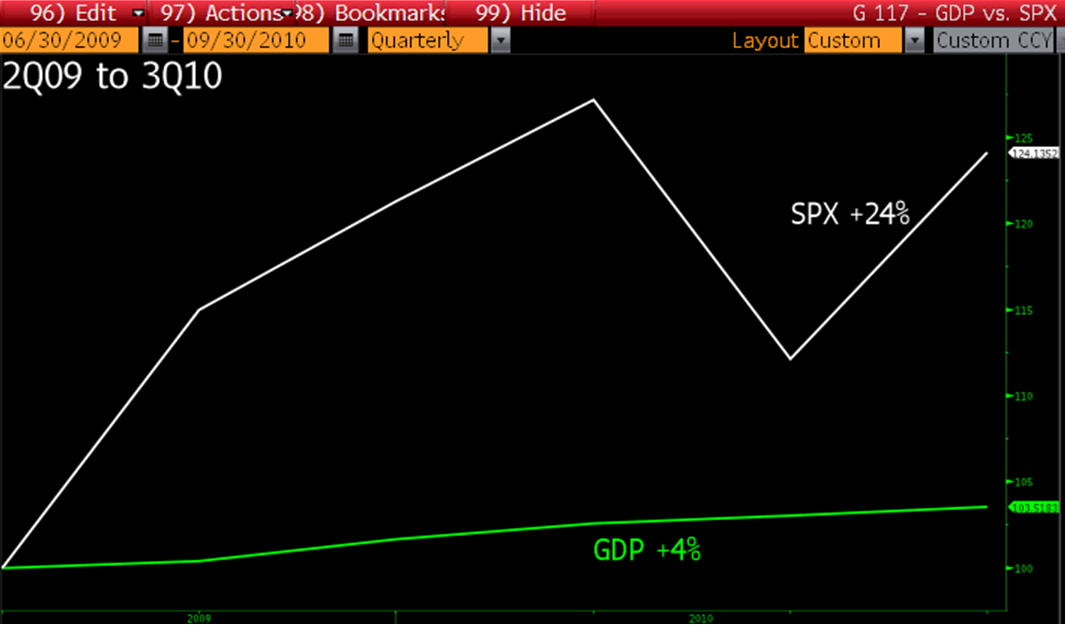
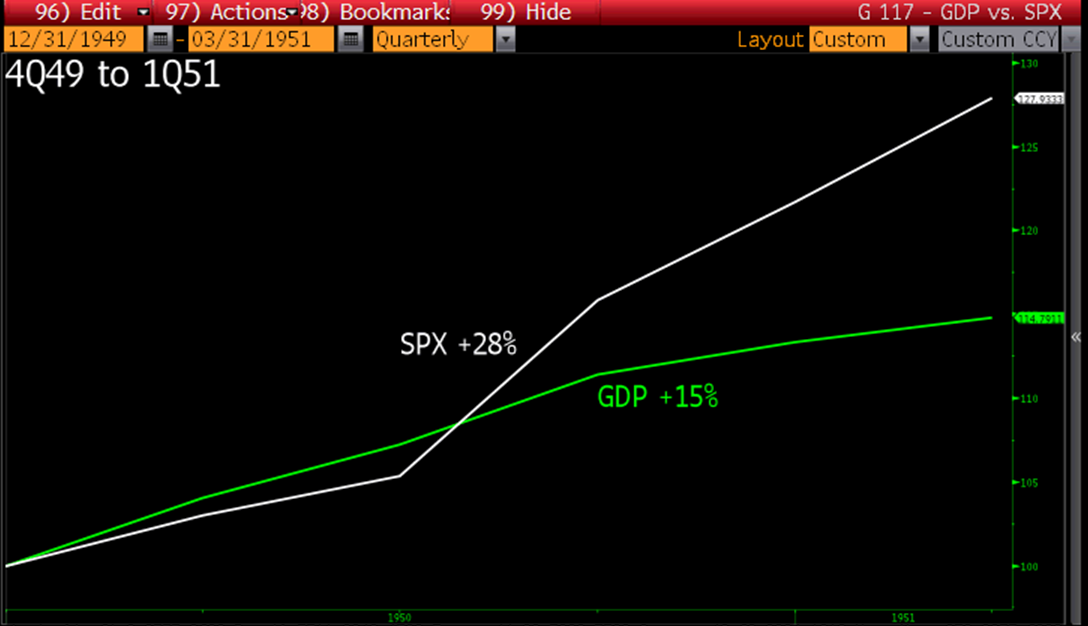
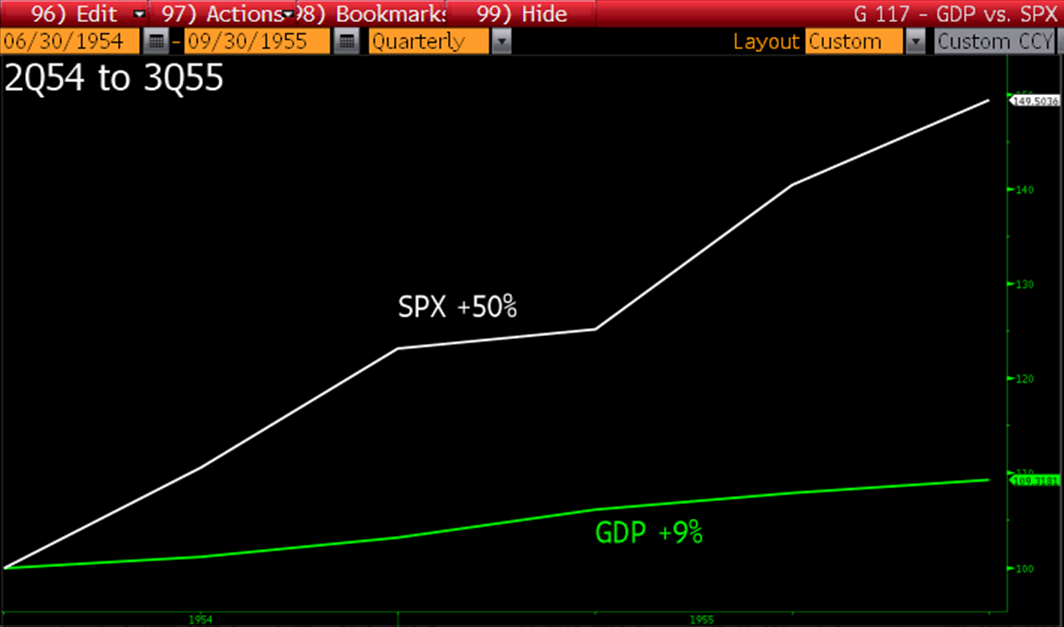
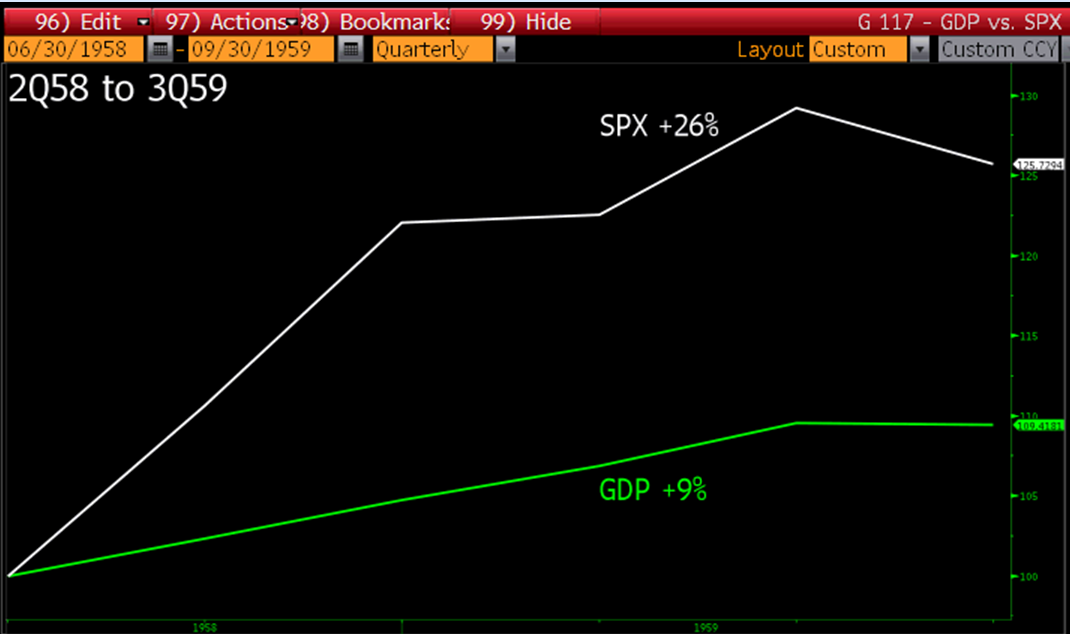
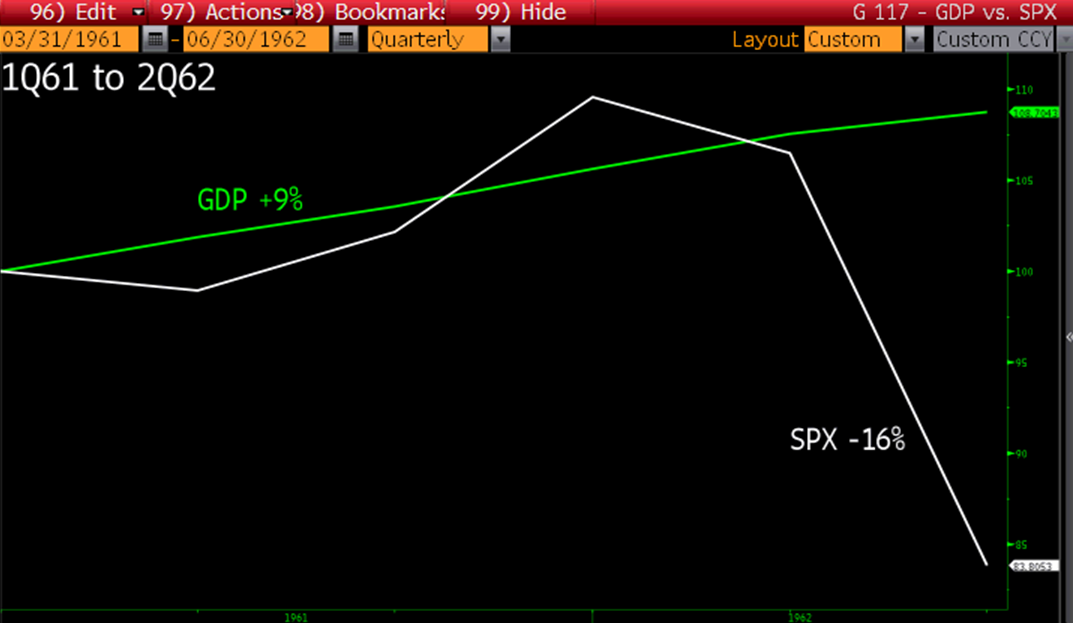
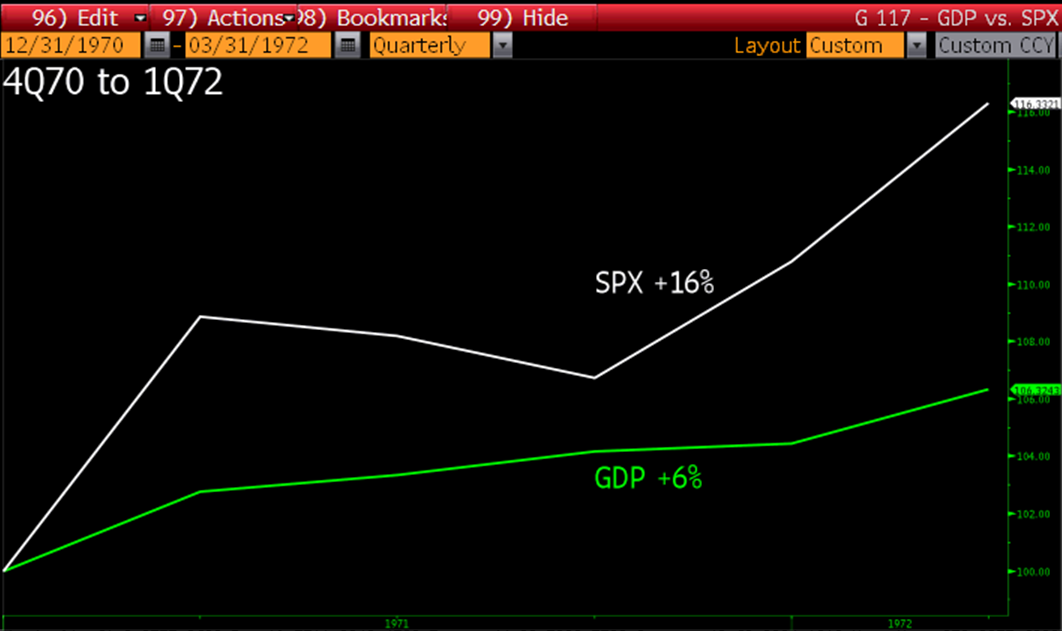
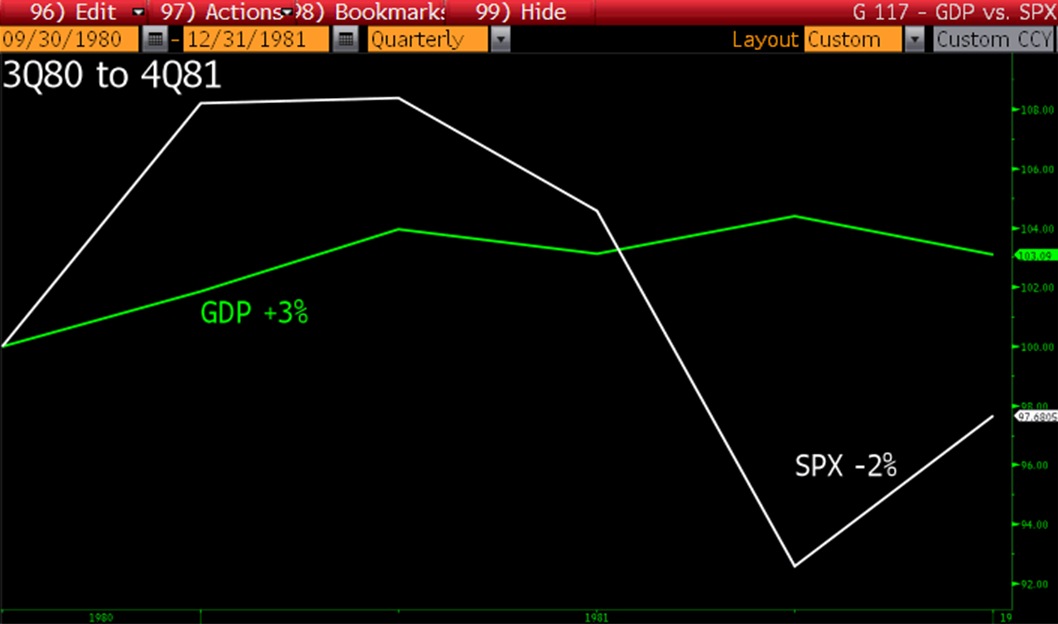
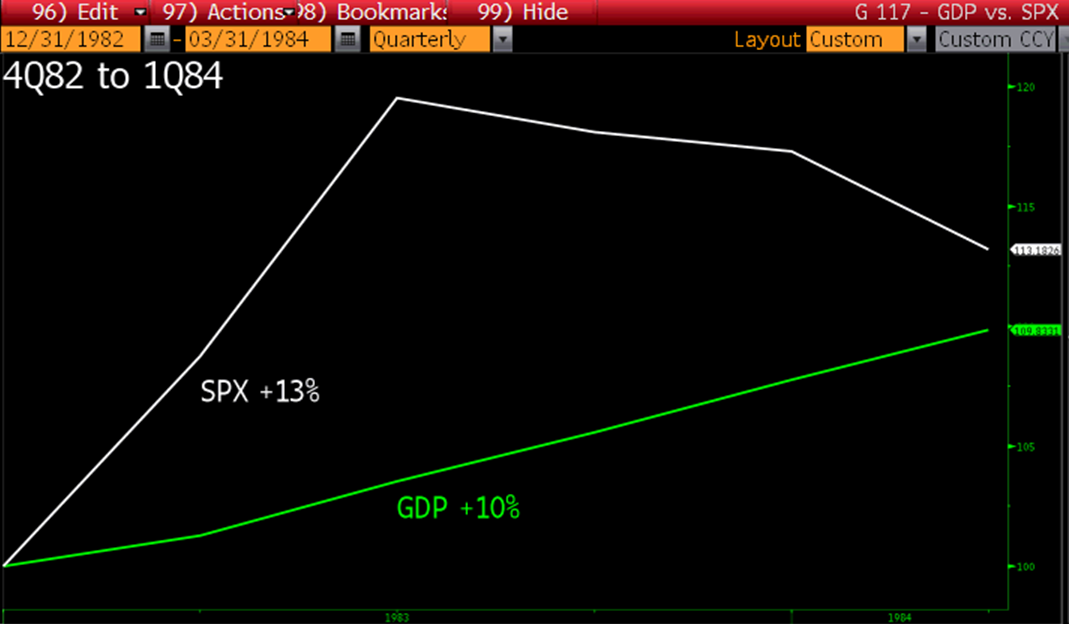
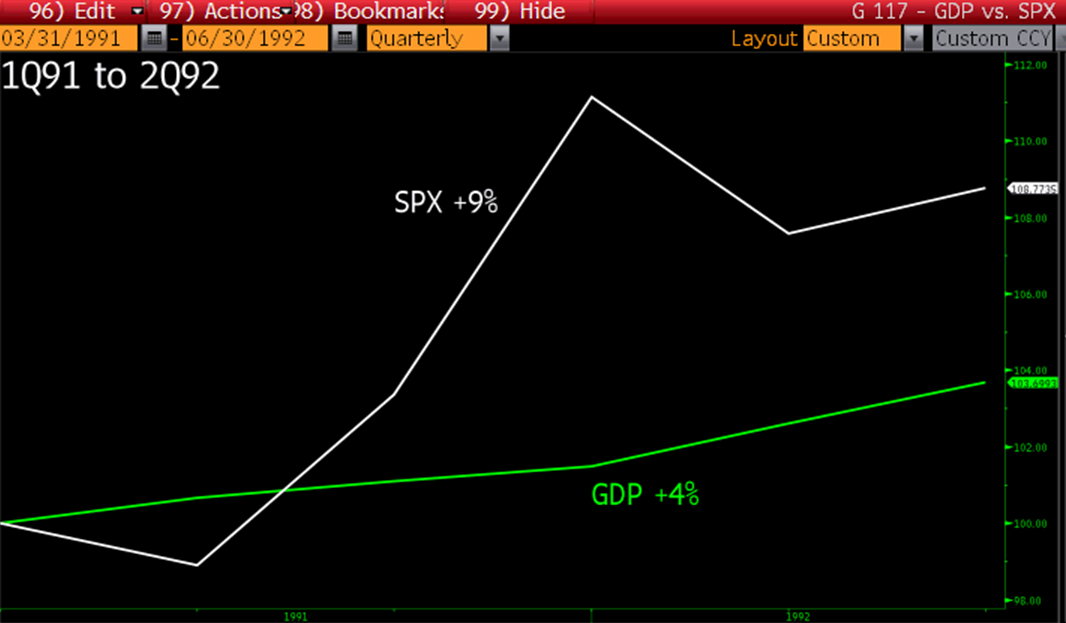
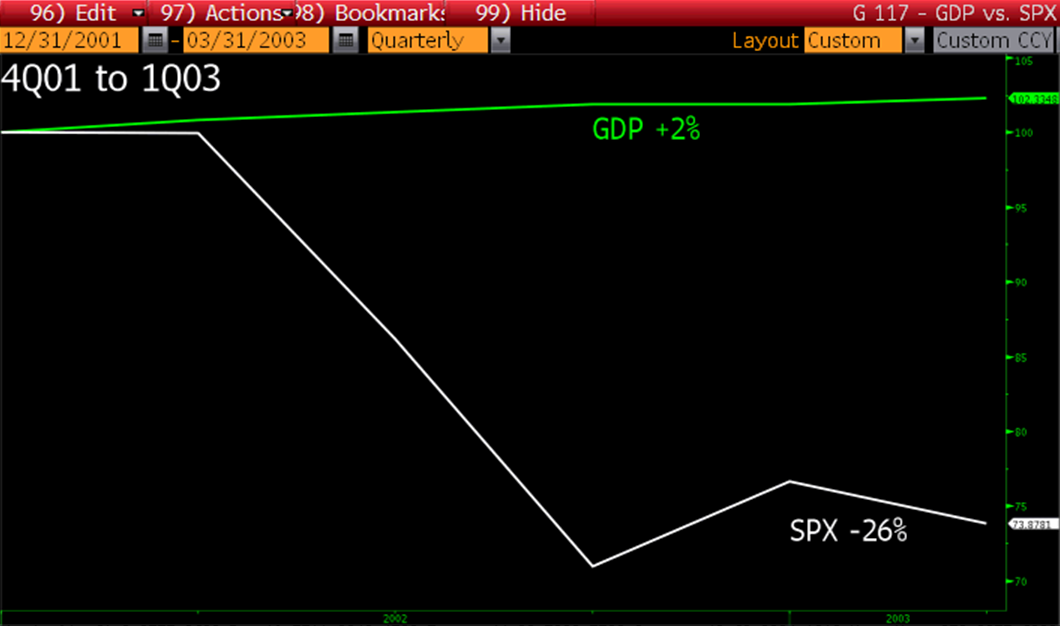
He sent over these charts that look at the relationship between GDP growth and stock appreciation in the 5 Quarters that follow the official NBER declaration of the end of the prior recession.
Note that this go round, the stock gains relative to GDP growth are rather outsized — up 24% for a mere 4% GDP. What is even more astonishing is this follows an already substantial 60% gain — SPX 666 to 919 — prior to the recession being declared over.
Looking at long term measures of valuation, such as Tobin Q ratio or Shiller’s Cyclically Adjusted Price/Earnings ratio, the market is significantly over valued. The likely cause is the Fed.
The caveats are that markets can remain over valued for extensive periods of time, and the Fed can keep the spigots open indefinitely.
>
>
7 additional recession recoveries after the jump


Tweet
Facebook
Reddit
Digg this!


January 21st, 2011 at 11:31 am
http://market-ticker.org/cgi-ticker/akcs-www?singlepost=2367706
January 21st, 2011 at 1:09 pm
Since stocks are a leading indicator, they probably need to be lagged by 3 to 6 months to be compared with GDP.
Even so, it’s a messy and sometimes inverse relationship. Strong GDP growth tends to mean overheating, which is bad for stocks.
For instance, quarterly real GDP growth was 7.0 percent in the 4th quarter of 1987, which included a stock market crash. The lagged stock index (sharp run-up of the previous spring and early summer in 1987) matched the strong 4Q GDP better than the contemporaneous index did.
Similarly, the mild stock correction in early 1984 (pictured above) foreshadowed a slowdown in GDP growth to 3.3% at the end of 1984, from the roaring 8 to 9% quarterly GDP growth rate of 2Q 83 through 1Q 84.
January 21st, 2011 at 1:18 pm
“The caveats are that markets can remain over valued for extensive periods of time, and the Fed can keep the spigots open indefinitely.”
______________
But they can’t catch their own tail (borrow themselves out of debt). Unless they’re planning on printing and distributing enough money to satisfy outstanding debt, plus some, they’re throwing bad money after bad.
January 21st, 2011 at 1:25 pm
LOVE this post! It rather proves my point.. this isn’t your typical post recession recovery!
January 21st, 2011 at 1:28 pm
I’ve been meaning to do this analysis for quite some time, but organization-building tasks have been eating up my time recently.
One thing to remember about GDP growth and Stock Market growth is that company REVENUES should track GDP growth (with a multiple > 1 for luxury stuff, and a multiple Stock Index relationship that one needs to consider, and part of why I haven’t been able to get to it myself.
Neat stuff, though!
January 21st, 2011 at 1:31 pm
Darn it, the middle 2 paragraphs of my post seem to have disappeared.
Basically, my points were that the relationship between GDP and Index appreciation has a bunch of intervening variables, including company’s leverage ratios and profit margins. During the crash, lots of companies found their balance sheets suddenly much more levered than before. Those that remained solvent found themselves with high financial leverage ratios and so even a small improvement in revenues could translate into a high ROE and rapid price appreciation.
January 21st, 2011 at 2:24 pm
“The caveats are that markets can remain over valued for extensive periods of time”
True
“and the Fed can keep the spigots open indefinitely”
Not True
January 21st, 2011 at 7:34 pm
@Barry
Stocks are correlated to corporate profits which have a high correlation but not 1:1 correlation to GDP growth.
When inflation begins to crimp corporate margins, and in turn affect corporate profits, the implications are negative for stocks.
That is when the “open spigots” become detrimental.
We are quickly reaching the tipping point here and have surpassed that point in Emerging Markets, hence their severe underperformance.
However, you have made some great posts that cite the longevity of bull markets. My guess is that the Central Banks “get religion” this year and policy is tightened – enough to spook the commodity markets – but not enough to kill the problem.
That may give this bull market 1.5-2 more years from here, but I expect the rally to be very narrow. In the last two similar environments, 1999-2000 and 2006-2007 “growth” has done very well. I plan to use 3 hands to buy mid-cap tech on the dip…
Go AAPL!
January 22nd, 2011 at 9:54 am
The comparisons are unfair since from the peak of 2007 to the bottom in 2009 the S&P 500 lost almost 60% of its value. In none of the other periods did the market fall as much. The wider you stretch a rubber band the more violent the snap back.
While I do agree that the Fed has aided the rally I don’t think it’s as much as most think. The reason is that p/e’s are lower now than a few years ago. Corporate earnings would not be as good if it was just money printing.
January 25th, 2011 at 4:19 am
[...] is today, and the numbers prove it: The GDP is up 4% – but the stock market’s up 24%. Barry Ritholtz thinks that’s due to Federal Reserve policy, and that sounds right. If you can get cheap low- [...]