
Yesterday we noted:
Now that companies have to disclose to all at the same time, we believe their investor relations departments are masters at guiding analysts just below actual earnings. This way the companies “beat” expectations and get the positive press and accolades that come with it. Further, it seems that everyone is happy with this apparent gaming of the system.
And:
In recent quarters, however, revenues are showing an upside bias. Is this because companies are genuinely reporting good numbers or are the investor relations departments now gaming these numbers as well? It’s hard to tell. But we can say in our unscientific review of earnings releases that companies are highlighting revenue beats more now than ever. This is a red flag that these numbers are also being gamed.
If expectations are being gamed on quarterly earnings, what about long-term earnings? Are they a better measure of economic health?
After 25 Years, Are We Getting Better?
In the chart below, the red line shows actual 12-month operating earnings for the S&P 500. The blue line shows the 12-month forward estimate lagged on year. In other words, the red line shows earnings over the previous 12 months and the blue line shows what analysts expected these earnings to look like. The blue bars in the second chart show the difference between these two measures. The source for this data is S&P and Bloomberg and it is calculated on a “bottom up” basis (more on this below).
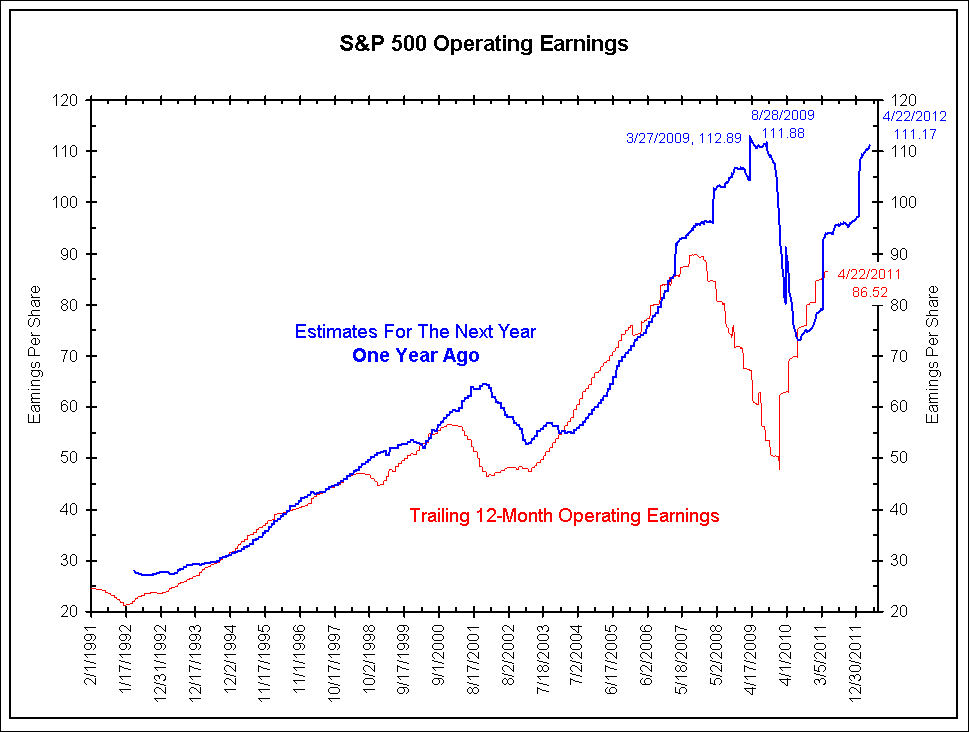

Note the variance in earnings versus expectations above. The Great Recession caused a massive divergence between expectations and actual earnings. Historically it seems as though the variability between these measures is growing. Whenever analysts miss, their error rate seems to be larger than it was the last time they missed.
Top Down Versus Bottom Up
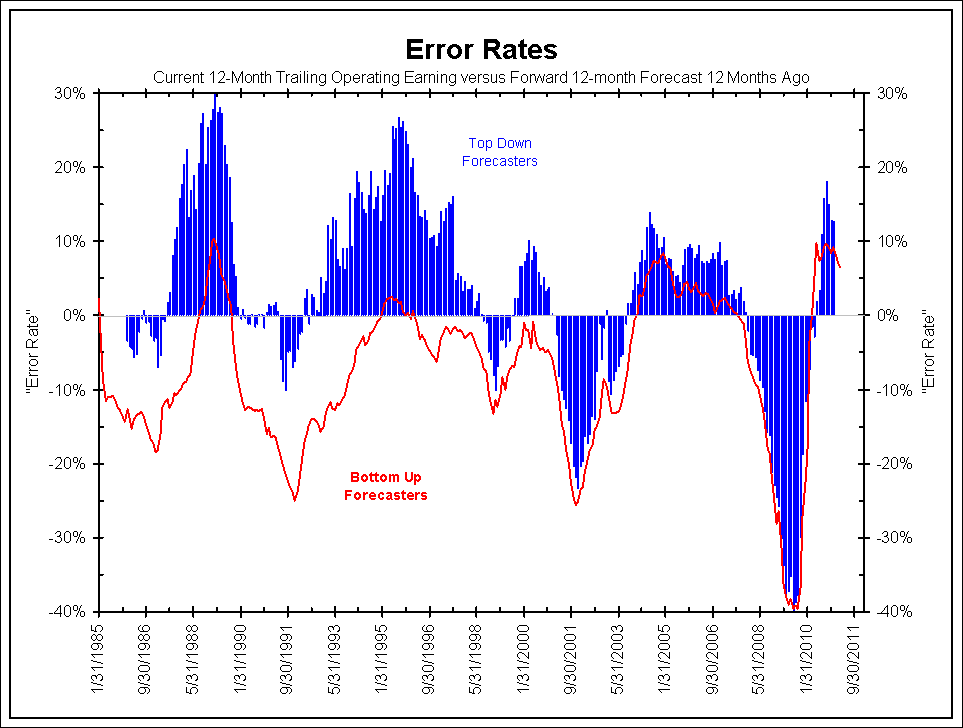
The next chart comes from IBES data. The two measures show the same error rates as explained above. The red line shows the error rate for bottom up forecasters. This is the sum of the earnings estimates for the 500 companies of the S&P 500. The blue bars show the error rate for top down forecasters, or strategists.
From 1985 to 2000 the error rates of top down and bottom up estimates varied greatly. Much of that period the top down forecasters were offering earnings guesses that were below the actual results (resulting in a positive divergence). The bottom up forecasters were often too optimistic and their guesses were above actual results (resulting in a negative divergence).
Since 2000, however, the top down and bottom up forecasts have been in synch with each other. And since 2000, the error rates are the largest we have seen in the last quarter century.
Conclusion
Earlier this month we suggested that U.S. Equities Remain Undervalued. This is completely correct if one can trust earnings estimates. The charts above suggest the estimates “work until they do not.” Restated, earnings estimates often miss when the economy goes into recession. Investing off estimates will usually result in profitability as the economy expands and losses when a recession hits.

What's been said:
Discussions found on the web: