
Nice grouping from Bloomberg Daily Brief:
Click to enlarge:
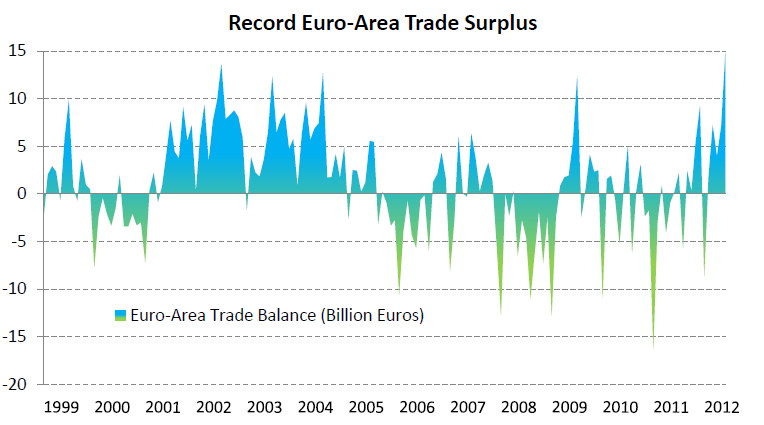
Exports from the euro area to the rest of the world rose 12 percent in June from a year earlier, outpacing a 2 percent annual gain in imports. The increase in exports may reflect a weakening of the euro against its major counterparts. The single currency is about 13 percent lower versus the dollar in the last 12 months.
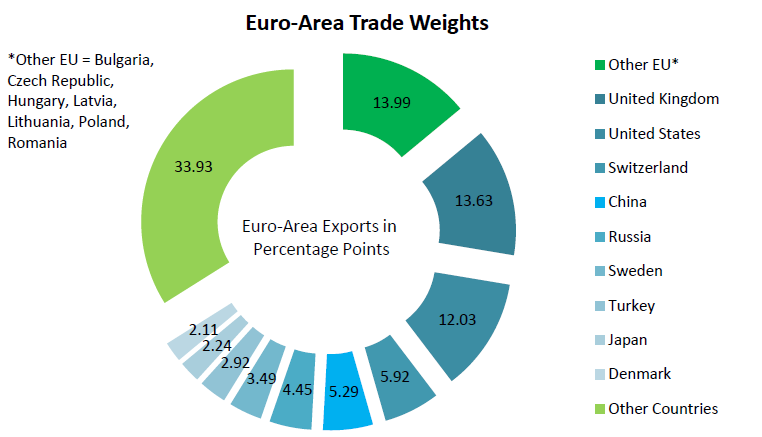
Twenty countries account for 80 percent of euro-area trade. The U.K., U.S., Switzerland and China have been the largest trading partners of the region since the introduction of the euro. In 2011, exports and imports of goods made up 37 percent of euro-area GDP, compared with 25 percent in 1999.
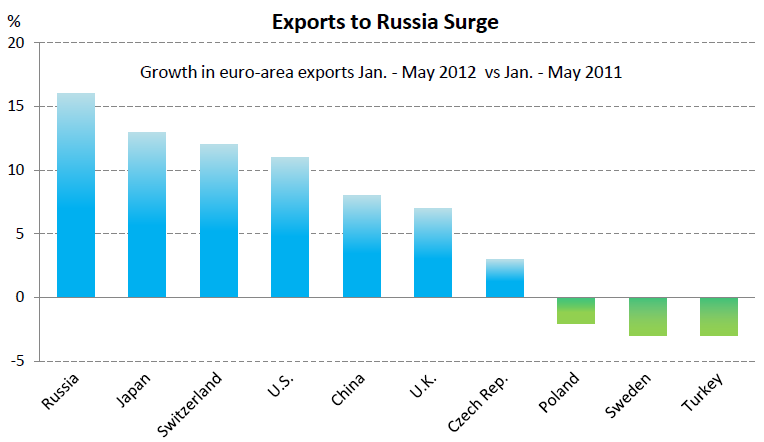
Exports to the U.S. rose 11 percent in the first five months from a year earlier, while shipments to the U.K. increased 7 percent. Exports to China and Russia jumped 8 percent and 16 percent, respectively, while Japan shipments climbed 13 percent. A slowing global economy and weakening demand poses a threat to euro-area trade. The IMF forecasts world GDP to grow this year at the slowest pace since 2009.
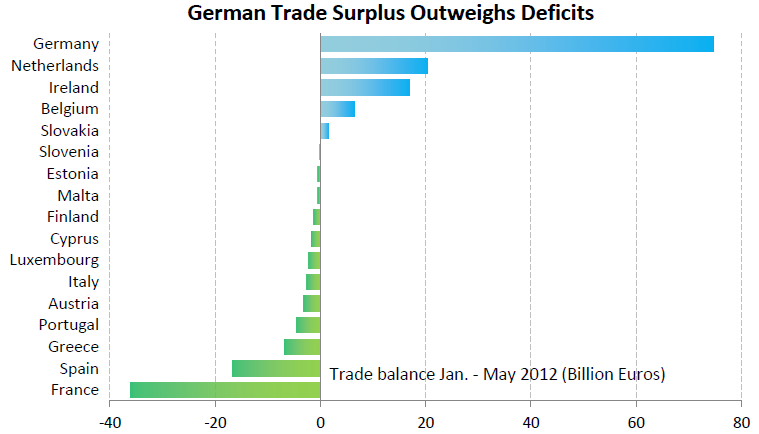
Germany and the Netherlands had the biggest trade surpluses in the euro area in the first five months — 74.7 billion euros and 16.9 billion euros, respectively. France and Spain had the largest deficits — 36.1 billion euros and 16.8 billion euros. The trade balances of countries facing or receiving bailouts are recovering mainly because of declining imports rather than rising exports. That increases the risk of future imbalances.
Source:
Bloomberg BRIEF August 22, 2012

What's been said:
Discussions found on the web: