Posts filed under “Apprenticed Investor”
>
My Sunday Washington Post Business Section column is out. This morning, we look at the question: Can two senators end ‘too big to fail’?
Here’s an excerpt from the column:
“Just how much of a subsidy are the banks receiving? An International Montetary Fund Working Paper quantified it as creating an 80 percent basis point advantage to TBTF banks. A 2012 FDIC study found similar advantages. The implicit government guarantee that these banks would not be allowed to fail allowed them to obtain credit at a more advantageous rate. Bloomberg calculated that this amounted to a taxpayer subsidy of $83 billion a year to the 10 largest U.S. banks, ranked by assets — and $64 billion to the five largest. At the request of Brown and Vitter, the Government Accounting Office is trying to more precisely quantify the annual subsidy to megabanks from the U.S. government.
In this column, I want to look at two broad issues: First, what does the legislation (TBTF Act, S. 798) purport to do? How would it affect the competitive landscape for community and regional banks? Could it prevent future megabank bailouts?”
Good stuff . . .
Source:
Can two senators end ‘too big to fail’?
Barry Ritholtz
Washington Post, May 12, 2013
http://www.washingtonpost.com/business/can-two-senators-end-too-big-to-fail/2013/05/09/aa01cc70-b5dc-11e2-b94c-b684dda07add_story.html
Category: Apprenticed Investor, Bailouts, Regulation
“We are in the business of making mistakes. The only difference between the winners and the losers is that the winners make small mistakes, while the losers make big mistakes.” -Ned Davis “More than anything else, what differentiates people who live up to their potential from those who don’t is a willingness to look…Read More
Category: Apprenticed Investor, Psychology, Rules, Trading
> My Sunday Washington Post Business Section column is out. This morning, we look at How Twitter is becoming your first source of investment news. Here’s an excerpt from the column: “Are you sensing a pattern here? Getting more and more of our news from the social network is having significant repercussions for markets —…Read More
Category: Apprenticed Investor, Investing, Technology
As stocks mark new all-time highs, many investors are left behind Barry Ritholtz, Washington Post April 7 2013 Imagine this: The Dow Jones industrial average travels 15,000 points, and you have nothing to show for it. Same for the S&P 500-stock index, a full 1,800 points, and the net gains are zero, nada,…Read More
Category: Apprenticed Investor
click for ginormous chart Source: AAII, Fusion Analytics Today, lets look at another interesting data point from AAII: Cash allocations reached a 16-month high in March. Individual investors pulled money from both equities and bonds last month. We have shown the flip side of this chart in the past — equity allocation — which…Read More
Category: Apprenticed Investor, Investing, Sentiment
A crucial investing question: Do you know your time frame? Barry Ritholtz, Washngton Post March 24 2013 Do you suffer from time frame confusion? That question came up recently when I was asked about a specific stock. Although we did not own that stock, I discussed why its sectors (health care and…Read More
Category: Apprenticed Investor, Investing
> My Sunday Washington Post column is out. This morning, we look at A crucial investing question: Do you know your time frame?. Quick excerpt from the column: “Good investors must learn to contextualize the daily background noise. That is my phrase for the never-ending proliferation of economic news releases, media broadcasts, technical updates,…Read More
Category: Apprenticed Investor, Investing, Psychology
Don’t just do something, sit there! I love that purposefully juxtaposed Yogi Berra-ism. I have been thinking about nothing on this lovely Friday morning. More precisely, why doing nothing — or at least much less — is better for your long term investing outcomes than doing something, also known as more. Don’t. Don’t…Read More
Category: Apprenticed Investor, Investing, Philosophy
Voters should pay attention to politics. Investors should ignore it. By Barry Ritholtz Washington Post, March 8 2013 On March 1, the $85 billion sequester went into effect. It will potentially shave half a percentage point from GDP. With estimates for this year’s economic growth at 1.5 to 2.0 percent, the sequester by…Read More
Category: Apprenticed Investor, Investing, Politics, Psychology
Way back in 2011, we pulled together a run of some of the Trading Rules & Aphorisms that show up on the site. It turned out to be a popular post, and I added “Rules” as a new category.
Thus, we update this semi- annually. These are my traders, analysts, economists and investors views’ on what to do — and what not to do — when it comes to markets that have been published on TBP.
Here is the latest update:
Trading & Investing Rules, Aphorisms & Books
• Sir John Templeton 16 Rules For Investment Success
• 10 Lessons from 1987 Market Crash
• Livermores Seven Trading Lessons
• Bob Farrell’s 10 Rules for Investing
• James Montier’s Seven Immutable Laws of Investing
• Richard Rhodes’ 12 Trading Rules
• John Murphy’s Ten Laws of Technical Trading
• Six Rules of Michael Steinhardt
• Nassim Taleb’s 5 Rules of Volatility
• Morgan Housel’s 9 Financial Rules
• David Merkel: The Eight Rules of My Investing
• Art Huprich’s Market Truisms and Axioms
• DENNIS GARTMAN’S NOT-SO-SIMPLE RULES OF TRADING
• Louis Ehrenkrantz’ 7 Golden Rules for Investing
• In Defense of the “Old Always” (Montier)
• Lessons Learned from 37 Years of Futures Trading
• Richard Russell’s The Power of Compounding
• The golden rules of investing (India)
• Dan Bunting’s Laws of Investing
• Cassandra’s (Not so) Golden Rules About Investing (& Not Investing)
If you have any suggestions for any good lists of rules I may have missed, please link to them in comments. If they are worthy, they will get added to the list.
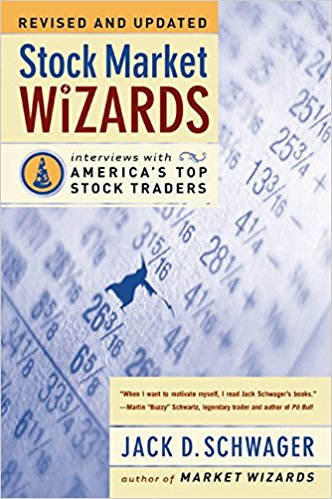
My own trading rules and favorite Trading Books are after the jump
Category: Apprenticed Investor, Investing, Rules, Trading