Bianco: Lower Your Expectations and the Fed Won’t Disappoint

Email this post Print this post
By Barry Ritholtz - April 25th, 2012, 10:30AM

Source: Yahoo Breakout Lower Your Expectations and the Fed Won’t Disappoint: Jim Bianco

The Federal Reserve Meets This Week

Email this post Print this post
By James Bianco - April 24th, 2012, 11:30PM

The Wall Street Journal – Jon Hilsenrath: A Forecast of What the Fed Will Do: Stand Pat

It’s possible to handicap the Fed’s changing forecast in part because officials are becoming open about it. And the outlook doesn’t look like it’s shifting in a way that would support new initiatives to boost economic growth. The new forecasts could project a little more inflation in 2012 than the Fed forecast in January, thanks in part to a recent rise in gasoline prices. It could also project a little less unemployment for 2012, thanks to recent declines in the jobless rate. But the overall growth outlook for 2012 doesn’t seem to have changed much from a few months ago. The economy looked at times in the first quarter as though it was gaining momentum, but it finished with a whimper which will likely reinforce Fed officials’ worries about the recovery’s durability. That should also mean their projections for 2013 and 2014 won’t change much until they get more evidence about how the recovery is evolving. Against the backdrop of a little more inflation and a little less unemployment than expected in the short-run, a scattering of officials might say that short-term interest rates should go up sooner than they projected in January to forestall a run-up in consumer prices. Narayana Kocherlakota, the Minneapolis Fed president, said recently the Fed would need to raise rates in 2013, or possibly sooner, by late 2012. But with many officials still doubtful about the durability of the recovery and expecting inflation to recede, the broader view at the Fed seems likely to favor sticking to their plan to keep rates low until late 2014.

Comment

Hilsenrath is the “Federal Reserve’s mouthpiece.”  The market is reading the story above as a draft of the FOMC statement.  We are too.

That said, one point of difference we have is the role of financial markets in the Federal Reserve’s decision making process.  If financial markets sell-off hard enough, that alone could spur the need for QE3.

The Financial Times – Economic outlook: QE outcomes awaited

There are two monetary policy meetings at major central banks this week, the Federal Reserve and the Bank of Japan, both of which have the potential to move the markets. Ben Bernanke follows the Fed’s likely decision to hold rates at between 0-0.25 per cent with a press conference on Wednesday at which he is expected to reiterate recent concerns about the cooling off of the US recovery in the last few weeks. The Federal Open Market Committee also presents its latest Summary of Economic Projections following the rate decision.

Barron’s – RANDALL W. FORSYTH: “Where’s the Fire, Ben?”

It’s almost certain that the Fed’s policy-setting panel will take no new initiatives and is likely to repeat yet again that it will “maintain a highly accommodative stance for monetary policy,” which translates to continuing through late 2014 its “exceptionally low” 0%-0.25% federal-funds target rate, which has been in place since late 2008. But it is equally unlikely that the FOMC will announce any new, extraordinary measures, such as additional rounds of quantitative easing or maturity-extension schemes, to attempt to bend down the long end of the yield curve. SO, WHY SHOULD ANYBODY CARE about this confab? Well, no new policy initiatives came out of the March FOMC meeting, while there were only subtle changes in the panel’s assessment of the economy and financial conditions. Nonetheless, the Treasury market’s inference that a third round of QE wasn’t in prospect, and that the Fed might begin nudging up the fed-funds rate somewhat sooner than late 2014, sent yields up about 35-to-40 basis points (0.35-to-0.40 of a percentage point).

Barron’s Online – Up and Down Wall Street Daily: A New Round of Monetary Easing Ahead?

Is the world on the cusp of a new round of monetary easing? Not yet, but if the global economies, debt crises or risk markets deteriorate, investors are expecting central banks to pump up their liquidity provisions, again. Two of the BRIC nations — India and Brazil — cut official interest rates more than expected while China is expected to lower required reserve ratios for banks, which frees up liquidity. Meanwhile, the last member of the quartet, Russia, also could ease policy down the road if its economy cools. Elsewhere, Australia could resume lowering rates next month. And Japan has pledged to keep the monetary pedal to the metal in order to weaken the yen and bolster trade. All of which reflect signs of slowing in global trade, which affects these largely export-dependent economies. The real focus will be on the two most important central banks, the European Central Bank and the Federal Reserve. While the official line at the ECB and the Fed is that no further stimulus is in prospect beyond what’s already been provided, markets are looking for clues for that to change.

CNBC – Bad Goldilocks’ Economy Puts Fed, Markets in a Box

In the era of historically large central bank interventions, the economy must now deal with “Bad Goldilocks,” a condition in which the recovery is too little to make a pronounced impact but remains just strong enough to keep the Federal Reserve on the sidelines. And since the onset of the financial crisis, any sign that the Fed may back off from quantitative easing stimulus has been poison for the markets, which have been struggling as of late. “We see risks of a ‘bad Goldilocks’ backdrop to financial markets in which the economy is neither ‘cold’ enough to provoke the quantitative easing that risk assets are now so cravenly dependent upon, nor ‘hot’ enough to provoke losses in bonds that would inspire a wholesale rotation out of fixed income into equities and commodities,” Michael Hartnett, chief global equity strategist at Bank of America Merrill Lynch, wrote in a recent note to clients.

The New York Times – Aiming for Clarity, Fed Still Falls Short in Some Eyes

The Federal Reserve chairman, Ben S. Bernanke, has tried to speak more clearly and more frequently than his predecessors. He has lectured college students, met with members of the military and, since last April, held quarterly news conferences. But as Mr. Bernanke prepares to meet the press for the fifth time Wednesday afternoon, after a scheduled meeting of the Fed’s policy-making committee on Tuesday and Wednesday, there are reasons to doubt that the efforts are increasing public understanding of monetary policy. Experts and investors have continued to disagree about the plain meaning of the Fed’s recent policy statements. Some say the increased volume of communication is creating cacophony rather than clarity. Political criticism of the Fed has continued unabated. And the economists and analysts who are paid to predict and translate the Fed’s actions and pronouncements for investors say that demand for their services has only increased.

Source: Bianco Research

Chairman Ben S. Bernanke: Some Reflections on the Crisis and the Policy Response

Email this post Print this post
By Barry Ritholtz - April 13th, 2012, 4:00PM

At the Russell Sage Foundation and The Century Foundation Conference on “Rethinking Finance,” New York, New York

April 13, 2012

~~~

I would like to thank the conference organizers for the opportunity to offer a few remarks on the causes of the 2007-09 financial crisis as well as on the Federal Reserve’s policy response. The topic is a large one, and today I will be able only to lay out some basic themes. In doing so, I will draw from talks and testimonies that I gave during the crisis and its aftermath, particularly my testimony to the Financial Crisis Inquiry Commission in September 2010.1 Given the time available, I will focus narrowly on the financial crisis and the Federal Reserve’s response in its capacity as liquidity provider of last resort, leaving discussions of monetary policy and the aftermath of the crisis to another occasion.

Triggers and Vulnerabilities
In its analysis of the crisis, my testimony before the Financial Crisis Inquiry Commission drew the distinction between triggers and vulnerabilities. The triggers of the crisis were the particular events or factors that touched off the events of 2007-09–the proximate causes, if you will. Developments in the market for subprime mortgages were a prominent example of a trigger of the crisis. In contrast, the vulnerabilities were the structural, and more fundamental, weaknesses in the financial system and in regulation and supervision that served to propagate and amplify the initial shocks. In the private sector, some key vulnerabilities included high levels of leverage; excessive dependence on unstable short-term funding; deficiencies in risk management in major financial firms; and the use of exotic and nontransparent financial instruments that obscured concentrations of risk. In the public sector, my list of vulnerabilities would include gaps in the regulatory structure that allowed systemically important firms and markets to escape comprehensive supervision; failures of supervisors to effectively apply some existing authorities; and insufficient attention to threats to the stability of the system as a whole (that is, the lack of a macroprudential focus in regulation and supervision).

The distinction between triggers and vulnerabilities is helpful in that it allows us to better understand why the factors that are often cited as touching off the crisis seem disproportionate to the magnitude of the financial and economic reaction. Consider subprime mortgages, on which many popular accounts of the crisis focus. Contemporaneous data indicated that the total quantity of subprime mortgages outstanding in 2007 was well less than $1 trillion; some more-recent accounts place the figure somewhat higher. In absolute terms, of course, the potential for losses on these loans was large–on the order of hundreds of billions of dollars. However, judged in relation to the size of global financial markets, aggregate exposures to subprime mortgages were quite modest. By way of comparison, it is not especially uncommon for one day’s paper losses in global stock markets to exceed the losses on subprime mortgages suffered during the entire crisis, without obvious ill effect on market functioning or on the economy. Thus, losses on subprime mortgages can plausibly account for the massive reaction seen during the crisis only insofar as they interacted with other factors–more fundamental vulnerabilities–that served to amplify their effects.

On the surface, the puzzle of disproportionate cause and effect seems somewhat less stark if one takes the boom and bust in the U.S. housing market as the trigger of the crisis, as the paper gains and losses associated with the swing in house prices were many times the losses associated directly with subprime loans. Indeed, the 30 percent or so aggregate decline in house prices since their peak has by now eliminated nearly $7 trillion in paper wealth. However, on closer examination, it is not clear that even the large movements in house prices, in the absence of the underlying weaknesses in our financial system, can account for the magnitude of the crisis. First, much of the decline in house prices has occurred since the most intense phase of the crisis; the decline in prices since September 2008 is probably better viewed as largely the result of, rather than a cause of, the crisis and ensuing recession. More fundamentally, however, any theory of the crisis that ties its magnitude to the size of the housing bust must also explain why the fall of dot-com stock prices just a few years earlier, which destroyed as much or more paper wealth–more than $8 trillion–resulted in a relatively short and mild recession and no major financial instability.2 Once again, the explanation of the differences between the two episodes must be that the problems in housing and mortgage markets interacted with deeper vulnerabilities in the financial system in ways that the dot-com bust did not. So let me turn, then, to a discussion of those vulnerabilities and how they amplified the effects of triggers like the collapse of the subprime mortgage market.

A number of the vulnerabilities I listed a few moments ago were associated with the increased importance of the so-called shadow banking system. Shadow banking, as usually defined, comprises a diverse set of institutions and markets that, collectively, carry out traditional banking functions–but do so outside, or in ways only loosely linked to, the traditional system of regulated depository institutions. Examples of important components of the shadow banking system include securitization vehicles, asset-backed commercial paper (ABCP) conduits, money market mutual funds, markets for repurchase agreements (repos), investment banks, and mortgage companies. Before the crisis, the shadow banking system had come to play a major role in global finance.

Economically speaking, as I noted, shadow banking bears strong functional similarities to the traditional banking sector. Like traditional banking, the shadow banking sector facilitates maturity transformation (that is, it is used to fund longer-term, less-liquid assets with short-term, more-liquid liabilities), and it channels savings into specific investments, mostly debt-like instruments. In part, the rapid growth of shadow banking reflected various types of regulatory arbitrage–for example, the minimization of capital requirements. However, instruments that fund the shadow banking system, such as money market mutual funds and repos, also met a rapidly growing demand among investors, generally large institutions and corporations, seeking cash-like assets for use in managing their liquidity. Commercial banks were limited in their ability to meet this growing demand by prohibitions on the payment of interest on business checking accounts and by relatively low limits on the size of deposit accounts that can be insured by the Federal Deposit Insurance Corporation (FDIC).

As became apparent during the crisis, a key vulnerability of the system was the heavy reliance of the shadow banking sector, as well as some of the largest global banks, on various forms of short-term wholesale funding, including commercial paper, repos, securities lending transactions, and interbank loans. The ease, flexibility, and low perceived cost of short-term funding also supported a broader trend toward higher leverage and greater maturity mismatch in individual shadow banking institutions and in the sector as a whole.

Read the rest of this entry »

How Has Fed Intervention Impacted Markets?

Email this post Print this post
By Barry Ritholtz - April 11th, 2012, 11:00AM

click for larger graphic

>

Terrific chart from Doug Short looks at the impact of the Fed on markets:

We’re well into our sixth month since the latest Federal Reserve intervention, Operation Twist, was officially announced on September 21. We’ve now seen several bouts of aggressive Fed attempts to manage the economy following the collapse of the two Bear Stearns hedge funds in mid-2007 about three month before the all-time high in the S&P 500 . . .

If a picture is worth a thousand words, this chart needs little additional explanation — except perhaps for those who are puzzled by the Jackson Hole callout. The reference is to Chairman Bernanke’s speech at the Fed’s 2010 annual symposium in Jackson Hole, Wyoming. Bernanke strongly hinted about the forthcoming Federal Reserve intervention that was subsequently initi

Good stuff. The two-fold question is: 1) When do the fundamentals trump Fed liquidity? 2) What will the Fed do in response to a falling market?

>

Source:
Fed Intervention and the Market: New Update
Doug Short
DShort, April 10, 2012
http://advisorperspectives.com/dshort/commentaries/Fed-Intervention-Update.php

On shadow banking

Email this post Print this post
By Paul Brodsky - April 11th, 2012, 8:30AM

It is important to distinguish between leveraged and unleveraged non-bank lenders, both investors and both implicitly “shadow banks”.

Leveraged non-bank lenders are ultimately part of the regular banking system, not the shadow banking system. When a leveraged investor, such as a hedge fund, buys a loan directly or buys a bond (i.e. makes a loan), it funds the purchase of that loan in the banking system. Any recognized or unrecognized loss on that loan first hits the equity of investors in that fund. The bank lender to the fund continually ensures that the fund maintains adequate equity against the fund’s aggregate loan book, which means that investors in the fund take first loss. If interest rates rise and bond prices decline or if the fund loses money and investors redeem their capital, then the aggregate value of the fund’s portfolio should reflect the market value of the loans in the bank funding its positions (which in turn would hit the value of the bank’s assets). So, from a theoretical and practical perspective, non-bank lenders borrowing to make loans are simply conduit lenders of the banking system.

Alternatively, when an insurance company or mutual fund buys a bond it is a loan that is fully reserved. The unleveraged fund does not borrow to purchase the bond, as does a bank or leveraged investor. Any recognized or unrecognized loss on that loan must be immediately valued as a loss to, say, Pimco’s fully-funded fund and, in turn, to the investors in Pimco’s fund that wired cash to fund their investment. Thus, the loan Pimco made is fully-reserved and there is no risk to the banking system (albeit there is risk to investors and, if widespread enough, risk to the aggregate economy). This means that fully-funded investors disintermediate the banking system at their own risk, not at the risk of depositors or taxpayers (as is the case with “too big to fail” banks).

Last we looked, there was approximately $19.5 trillion in US bank assets (and almost $10 trillion in deposits) reserved by about $1.6 trillion. Globally, the ratio was about the same; approximately $95 trillion of bank assets reserved by about $7.5 trillion. Thus, banks are fractionally reserved at about 8%-9% of their loan books. Obviously, any losses in their loan books requires offsetting hits to their reserves. In the current environment it wouldn’t take much of a shift in bond values for system-wide bank insolvency. (Where is the risk again, in the shadow banking system?)

Finally, leveraged entities, either bank or non-bank, may borrow $1,000 from the Fed (directly or indirectly) at near 0% and purchase $10,000, $20,000, $50,000 US Treasury notes at 2%. Since the Fed has declared it has my back by targeting short rates near zero for at least through 2014, I have incentive to clip coupons and make 10%, 20%, 50% (almost an infinite return on capital). By the way, doing so funds Treasury…and Congress. It’s a win/win right? Banks and levered bond funds fund the government and their end-of-year bonuses are a lock.  (Pay no attention to the grossly false economic signal benchmark “risk-free” interest rates are sending to economists and tertiary bond and stock markets.) There’s no conspiracy here; only blatant incentives.

Lee Quaintance & Paul Brodsky
QB Asset Management Company, LLC
pbrodsky@qbamco.com

The FOMC Minutes …QE3 And Inflation

Email this post Print this post
By James Bianco - April 5th, 2012, 8:30AM

Click to enlarge:

˜˜˜

The Wall Street Journal – John Hilsenrath and Matt Phillips: Fed Holds Fire on Stimulus
The Fed is in no hurry to launch new measures to boost economic growth, minutes from the central bank’s most recent meeting showed, disappointing investors eager for more stimulus. Among the hints dropped in minutes of the Fed’s March 13 policy gathering, Federal Reserve staff concluded that the U.S. economy is a little more susceptible to inflation than previously thought. That and other signals suggested that another round of bond buying by the Fed to push down long-term interest rates isn’t imminent. The minutes are written without specific staff forecasts or naming any officials. Still, they were written in a way that made clear Fed staff hadn’t made dramatic revisions to their forecast. The minutes showed that Fed officials themselves are very much divided over slack. One Fed official argued at the meeting that the economy was “much closer” to using up its idle resources than previously thought. “A few” officials thought the economy had emerged from recession with less potential to grow without causing inflation.Other officials said there was still “substantial slack,” particularly in the job market. The U.S. unemployment rate is 8.3%, which is 2.5 percentage points above its average since the 1940s.

The Financial Times – Why the Fed has taken QE3 off the agenda
The minutes of the Federal Open Market Committee meeting on March 13 have surprised the markets. The committee seems to have shifted in a markedly more hawkish direction than was reflected in the statement issued after the meeting, and the bar to quantitative easing 3 now seems to be rather high. Perhaps we should have expected this, given the fact that speeches by chairman Ben Bernanke and Bill Dudley since the meeting had given no hint of any further easing. But the breadth of the committee’s shift away from easing was certainly not expected. It is easy to find hawkish phrases in the minutes. The US Federal Reserve staff has not only upgraded its real gross domestic product projections, and increased its inflation forecasts, but has also reduced its estimate of the output gap. Only “a couple” of FOMC members saw any case for further easing, and then only if growth falters or inflation falls below target. There was even some discussion of changing the guidance on keeping short rates “exceptionally low” up to the end of 2014, a move which would really shock markets. In an important speech last month, Mr Bernanke again concluded firmly that cyclical unemployment is far too high. But, significantly, he did not suggest that there was still a “very strong case” for “additional tools” to support the economy. He is probably biding his time, waiting for clearer evidence from the labour market that more action is needed. There are three areas of uncertainty in the labour market which the Fed will be watching carefully.

CNBC.com – Fed Appears Less Keen On Further Easing: Minutes
Federal Reserve policymakers appear less keen to launch a fresh round of monetary stimulus as the U.S. economy improves, according to minutes for the central bank’s March meeting. The Fed policymakers noted recent signs of slightly stronger growth but remained cautious about a broad pick up in U.S. economic activity, focusing heavily on a still elevated jobless rate. However, the minutes suggest the appetite for another dose of quantitative easing, so-called QE3, has waned significantly.The March meeting minutes noted “a couple” of members thought additional stimulus might be needed if the economy loses momentum or inflation remains too low for too long.That contrasted with a much broader characterization in January, when the minutes cited a few members as seeing a possible need for additional easing before long, and others thinking stimulus might be required if economic conditions worsened.Still, the Fed remained sober about U.S. economic prospects.Members “generally agreed that the economic outlook, while a bit stronger overall, was broadly similar to that at the time of their January meeting,” the minutes said.

Bloomberg.com – Fed Signals No Need for More Easing Unless Growth Falters
The Federal Reserve is holding off on increasing monetary accommodation unless the U.S. economic expansion falters or prices rise at a rate slower than its 2 percent target. “A couple of members indicated that the initiation of additional stimulus could become necessary if the economy lost momentum or if inflation seemed likely to remain below” 2 percent, according to minutes of their March 13 meeting released today in Washington. That contrasts with the assessment at the FOMC’s January meeting in which some Fed officials saw current conditions warranting additional action “before long.” The March minutes show decreased urgency to add stimulus with no sentiment expressed for additional easing without a deterioration in economic conditions. The central bank also affirmed its plan, first announced in January, to hold interest rates near zero through late 2014 as the economy’s improvement may not be sufficient to lower the outlook for coming years.

Comment

Yesterday the Federal Reserve released the minutes from the March 13, 2012 meeting. On page 7 of the linked PDF they said:

With longer-run inflation expectations still well anchored, most participants anticipated that after the temporary effect of the rise in oil and gasoline prices had run its course, inflation would be at or below the 2 percent rate that they judge most consistent with the Committee’s dual mandate. Indeed, a few participants were concerned that, with the persistence of considerable resource slack, inflation might be below the mandate-consistent rate for some time. Other participants, however, were worried that inflation pressures could increase as the expansion continued; these participants argued that, particularly in light of the recent rise in oil and gasoline prices, maintaining the current highly accommodative stance of monetary policy over the medium run could erode the stability of inflation expectations and risk higher inflation.

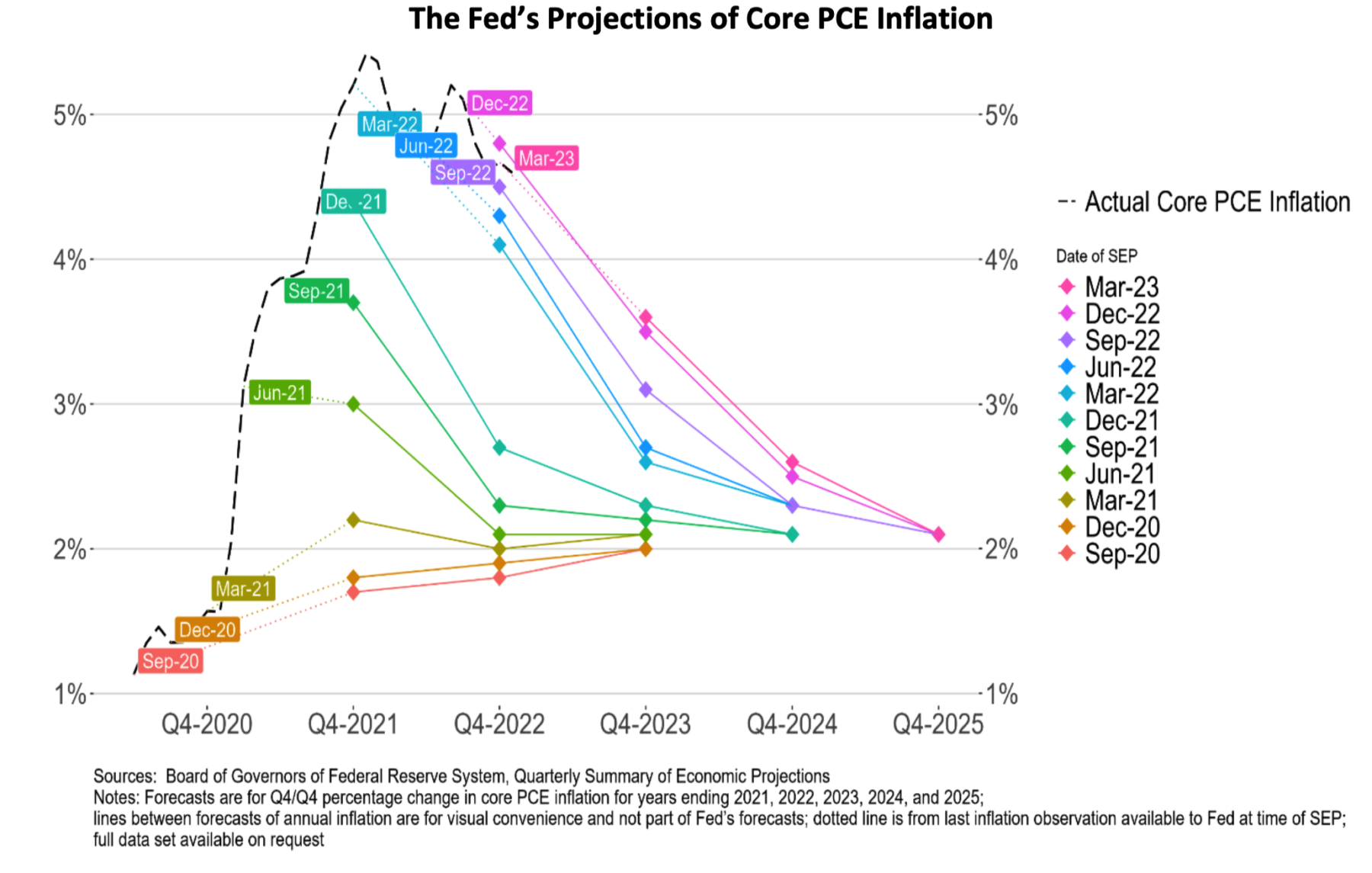
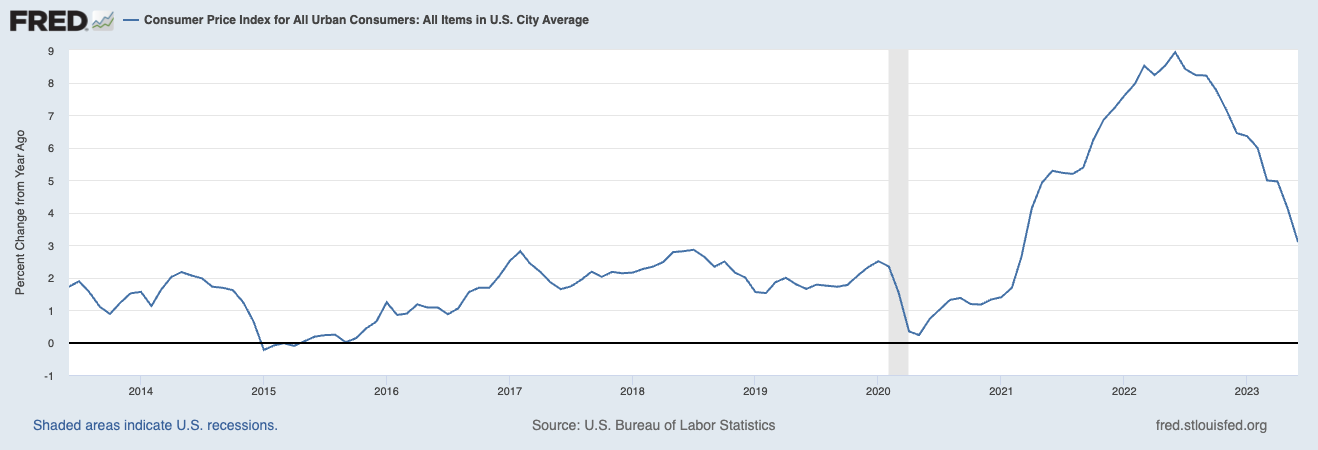
So the Federal Reserve repeated what they said back in January. They believe that year-over-year PCE will decline in the next few years and come in below their 2% target. The Federal Reserve is basically telling us to ignore the actual data and forward projections by the markets (detailed yesterday) and go with the FOMC forecast.

This would be fine if the Federal Reserve provided good forecasts in the past, but given their recent track record on GDP, unemployment, inflation and on housing, we are wary.

Project Syndicate – Martin Feldstein: Fed Policy and Inflation Risk
During the past four years, the United States Federal Reserve has added enormous liquidity to the US commercial banking system, and thus to the American economy. Many observers worry that this liquidity will lead in the future to a rapid increase in the volume of bank credit, causing a brisk rise in the money supply – and of the subsequent rate of inflation. That risk is real, but it is not inevitable, because the relationship between the reserves held at the Fed and the subsequent stock of money and credit is no longer what it used to be. The explosion of reserves has not fueled inflation yet, and the large volume of reserves could in principle be reversed later. But reversing that liquidity may be politically difficult, as well as technically challenging. Anyone concerned about inflation has to focus on the volume of reserves being created by the Fed. Traditionally, the volume of bank deposits that constitute the broad money supply has increased in proportion to the amount of reserves that the commercial banks had available. Increases in the stock of money have generally led, over multiyear periods, to increases in the price level. Therefore, faster growth of reserves led to faster growth of the money supply – and on to a higher rate of inflation. The Fed in effect controlled – or sometimes failed to control – inflation by limiting the rate of growth of reserves. The Fed began an aggressive policy of quantitative easing in the summer of 2008 at the height of the economic and financial crisis. The total volume of reserves had remained virtually unchanged during the previous decade, varying between $40 billion and $50 billion. It then doubled between August and September of 2008, and exploded to more than $800 billion a year later. By June of 2011, the volume of reserves stood at $1.6 trillion, and has since remained at that level.

Source: Bianco Research

Jim Grant on Fed Errors

Email this post Print this post
By Barry Ritholtz - April 1st, 2012, 4:55PM

James Grant, Grant’s Interest Rate Observer, says U.S. policymakers are prolonging symptoms of the recession, adding that the Fed should learn from the 1920-21 Depression.

What’s on Jim Grant’s Mind?

Thu 29 Mar 12 | 04:10 PM ET

Window Dressing or Something More?

Email this post Print this post
By Barry Ritholtz - March 30th, 2012, 7:21AM

Many people seems to be crediting the market’s resilience to factors such as end of the month/quarter window dressing.

I remain unconvinced.

There has been a solid bid under this markets since October, goosed every time Ben Bernanke thinks about any form of liquidity. If he so much as eases himself into a hot bath, the market shoots higher.

The chart below is a variant of something we have shown repeatedly. It is the SPX overlaid with each of the Fed Quantitative operations. The latter phase of this Bull market clearly reflects the Fed’s impact on equity prices.

Let’s start with 2009: In March of that year, I saw the conditions in place for a bottom. However, I was not clued into just how significant the Fed’s role was going to be a year later. I credit (former bond guy and now all around strategist) James Bianco for making me understand in September 2010 just how influential — nay, dominant — the Fed was going to be with QE2. When we saw the same circumstances in October 2011 — August selloff, fear of double dip recession — we just knew the next Fed program was imminent. Operation Twist was launched about 25% SPX ago. Now, markets are running up in anticipation of the third movie in the Fed trilogy, QE3.

I keep telling hedge fund buddies its not their job  to be policy wonks. My job is to assess the seas, winds and tides, and sail into the right direction. That’s the role of any asset manager.

However, I cannot help but wonder if Bernanke hasn’t painted himself into the same corner that Greenspan did. The traders on the street — essentially 2-year olds with fast computers that slosh around billions in assets — know exactly how to throw a hissy fit. They are happy to whack the market 20% to get Ben’s attention, and he seems happy to give them their binky to make them stop crying and go back to their cribs.

The Fed and Wall Street have evolved into a dysfunctional relationship, and the most powerful central bank in the world seems to not know significantly the power in its most significant relationship has shifted.

The Fed has been %#$$y-whipped by a bunch of tantrum throwing 28 year old traders. In order to tighten monetary policies to some semblance of normalcy is going to take a number of things going just right. I hope they can accomplish this; I suspect to do so is going to require a combination of extraordinary skills and stupendous luck.

>

Another Fed Stimulus Program Ending Soon ?
click for larger chart

>

Source:
10 Indicators to Watch for Another Spring Slide
Jeffrey Kleintop
LPL Financial March 26, 2012
http://lplfinancial.lpl.com/Documents/ResearchPublications/Weekly_Market_Commentary.pdf

Is QE3 Coming?

Email this post Print this post
By James Bianco - March 28th, 2012, 8:30AM

Bloomberg.com – Pimco’s Gross Says Fed May ‘Hint’ at QE3 at April Meeting
Bill Gross, who runs the world’s biggest bond fund at Pacific Investment Management Co., said the Federal Reserve will probably signal it plans to arrange a third round of debt purchases when policy makers meet in April. The end of tax breaks enacted by President George W. Bush and $1 trillion of mandatory federal budget cuts are raising concern that declining unemployment will give way to slower economic growth that requires support from the central bank. Policy makers under Chairman Ben S. Bernanke have purchased $2.3 trillion of Treasuries and mortgage debt in two rounds of so- called quantitative easing, known as QE1 and QE2, as they try to sustain the expansion. The Fed is “likely to hint” at QE3 at its April 25 gathering, Gross wrote on Twitter.

Comment

Gross is so plugged in to the FOMC it is as if he is the de facto Federal Reserve chairman. His comments on Federal Reserve policy hold the same weight as the WSJ’s Jon Hilsenrath (aka “the Federal Reserve’s mouthpiece”).

Recall that the first tweet Gross ever sent told everyone to expect Operation Twist by fall, which is largely what happened.

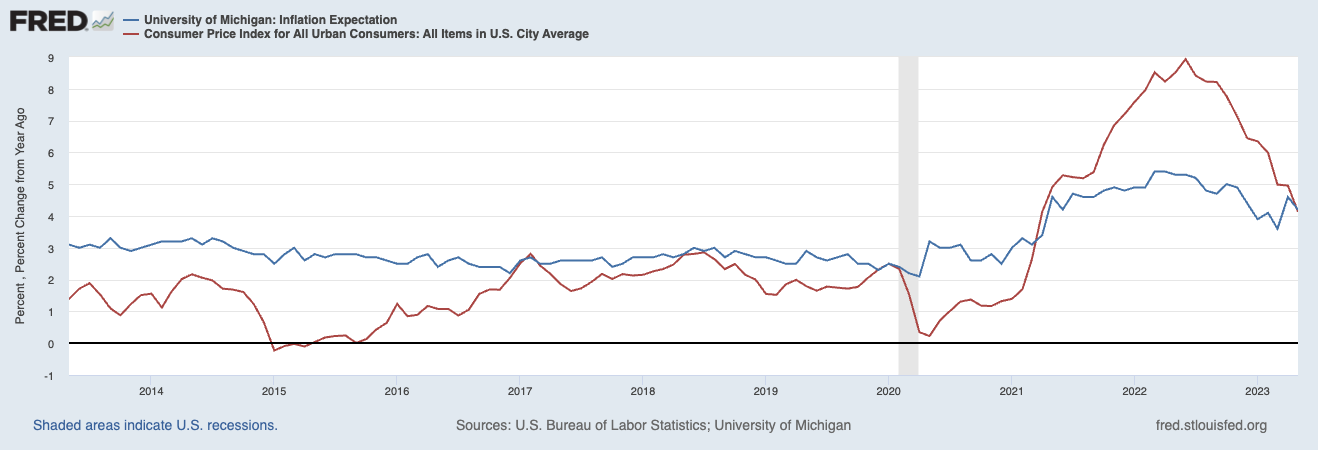
In the last week, many members of the FOMC argued in favor of ending any form of QE, citing rising inflation expectations. See the story below.

Gross is telling us to ignore this sentiment. The printing presses are still on and another edition of QE is coming.

How will the market take this? Will it embrace risk assets (stocks) because more money printing is coming or will it worry that the Federal Reserve is going too far and inflation is coming back?

We fear the latter. As we have pointed out before, traders now have a better grasp on the effect of QE on the markets.

Stocks peaked seven weeks after QE1 ended (the market was slow to understand QE)
Stocks wised up and peaked three weeks before QE2 ended

Following this pattern, we have argued that this time stocks will peak on the announcement of QE3. Is the hope of QE3 one of the supporting reasons the S&P is up 11% YTD? In other words, has the market already experienced the QE3 rally (buy the rumor) and will its announcement mark a peak in risk assets (sell the news)?

If we are correct that stocks (risk assets) fail to advance on more QE, inflation fears will be cited as the reason.

Bloomberg.com – Fed Purchases of More Bonds Opposed by Two Regional Presidents
Two Federal Reserve district bank presidents said the strengthening U.S. economy is reducing the need for additional monetary easing. “As the U.S. economy continues to rebound and repair,” additional steps “may create an overcommitment to ultra-easy monetary policy,” St. Louis Fed President James Bullard said in a speech yesterday in Hong Kong. Atlanta Fed President Dennis Lockhart said in Washington that “we should hold the balance sheet where it is for the time being and watch how the economy evolves.” The remarks from Lockhart and Bullard, who have never dissented from a decision by the Federal Open Market Committee, reflect broadening sentiment on the panel against further steps to spur growth. The Fed has held interest rates near zero since 2008 and purchased $2.3 trillion in bonds to spur growth after unemployment rose to as high as 10 percent in 2009. The jobless rate is now 8.3 percent, and the economy has been expanding for more than two years.

Click to enlarge:

Source: Bianco Research

Fed Chairman Ben Bernanke (Diane Sawyer Interview)

Email this post Print this post
By Barry Ritholtz - March 28th, 2012, 6:08AM

Federal Reserve Chair Ben Bernanke on Economy: ‘Far Too Early to Declare Victory’

More videos and transcripts after the jump

Read the rest of this entry »

51 queries. 0.512 seconds.