Hilariously Ill-Informed, Shockingly Clueless, Cognitively Impaired, Ignorant Commenters at Yahoo Finance

Email this post Print this post
By Barry Ritholtz - April 27th, 2012, 8:48PM

I’ve been meaning to address this for some time, and today is as a good a time as any.

Over the years, I  have participated in interviews at Yahoo Finance — its always a fun time, Aaron Task, Jeff Macke, Henry Blodget, Dan Gross & Co. are very sharp guys. Its usually a short, smart interview with insightful questions and fun topics.

Then there are the Yahoo (almost message board) comments.

I cannot tell you what a wonderful tell — just top notch contrary indicator — these have been over the years. Check out Sucker’s Rally Alert: Dow Going Below 10,000 (Aug 12, 2008) — its too bad that when they redid the site, Yahoo lost the Incredibly Bullish comment stream, just as we were heading right into the collapse.

The opposite played out, on March 9th 2009: “Big Bear Market Rally Coming,” Says Noted Bear Barry Ritholtz (recorded March 9th webcast Mar 10, 2009 08:35am) The comments were incredibly negative to any sort of good news.

More recently, we did Bear Days of August Might be Over, Says Barry Ritholtz in September 2010, just as QE2 was ramping.  (These comments were not much better: House Prices Are Still 10% Too High, Says Barry Ritholtz).

Which brings me to this week’s appearance. 2 negative pieces, one positive

-U.S. Economy Right Where It’s Supposed to Be, Ritholtz Says

-Despite Falling Prices, Housing Sector Is Recovering. Really.

-America Is So Not In Decline: Ritholtz

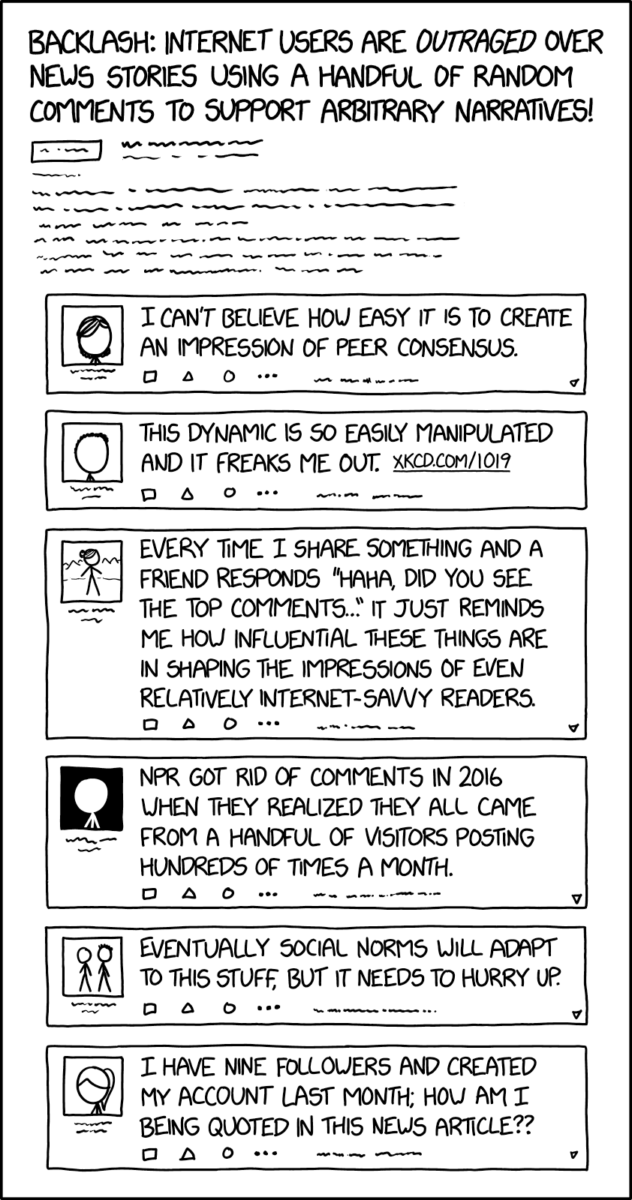
You have to go read some of the comments — especially on the America Is So Not In Decline  — they are simply hilarious examples of cognitive foibles, selective perceptions, bias and just plain human silliness you will ever see. I tried pushing back on a few of them, but its a tide of ignorance, and I only have 2 thumbs to stick in the dike.

Read ‘em and understand why most investors under-perform . . .

>

Previously:
You MUST read the comment streams at Yahoo Tech Ticker (September 3rd, 2010)

#Frontline

Email this post Print this post
By Barry Ritholtz - April 24th, 2012, 10:31PM

Fascinating to be watching the Frontline documentary while simultaneously watching the Tweetstream discuss this:

>


DropBox Competitors

Email this post Print this post
By Barry Ritholtz - April 24th, 2012, 3:30PM

A few weeks ago, I mentioned my 5 favorite websites. One of those was DropBox, which works flawlessly, cross-platform, and on mobile (They are rumored to be heading for an IPO).

Since then, I have discovered a few competitors. One is called CX.com, and they give you 10 gigs for free. The other is a little site called Google Drive, and they start you out with 5 free gigs.

>

CX.com

>
Google Drive

>

Now you know!

Flowchart: Should You Send That Email?

Email this post Print this post
By Barry Ritholtz - April 13th, 2012, 1:30PM

click for complete infographic

full graphic after the jump

Read the rest of this entry »

5 Most Useful Websites & Tools

Email this post Print this post
By Barry Ritholtz - April 12th, 2012, 8:00PM

Its funny how this happens: You are on the road, out of your comfort zone, and you come to realize some of your favorite tools and sites.

I am leaving out sites like Google Maps, Yahoo Finance, WordPress, Bloomberg, Google Docs, Twitter, etc. in favor of smaller entities.

These are my 5 most helpful sites:

FollowupThen.com An incredibly useful and easy service — send an email to FollowupThen to get an email reminder in the future. You can get specific as 12pmAug25@followupthen.com or as general as nextweek@followupthen.com. It works flawlessly.

Leemail.me puts a widget on a browser that allows me to create custom emails specific to any site. Lets say I want to sign up for something on funkysite.com, but I am reluctant to them my email address. Leemail creates an address that I can use — BR@ funkysite.leemail.me — that I can easily shut off (much easier than unsubscribing). And, if I get spam to that address, I know funkysite sold my address (and therefore must die).

DropBox: I assume most people are familiar with this — a free 2GB account is yours for the asking to store docs, PDFs, etc. I find myself using it more and more — client info, author photos, big files — it just works.

Instapaper: works well to create a library of articles I want to read later. It also allows my assistant Anna to easily help me create the Reads that grace these pages so often. Works great with an iPad as well.

Economagic.com gives me access to 1000s of economic data series and charts. Allows for fast and easy creation. FRED (Federal Reserve Economic Data) is another killer site that allows free access to different runs of economic numbers. Between the two of them, if you cannot find what you are looking for, you need to get a Bloomberg terminal.


Thats my fast five.


What are your favorite websites & tools?


Facebook Apps Gather More Than You Realize

Email this post Print this post
By Barry Ritholtz - April 8th, 2012, 7:00AM

Apps on Facebook may be grabbing and sharing more personal information than many users realize. And even if people understand that they’re sharing personal data, they often can’t envision the ways it may be used in the future. WSJ’s Julia Angwin explains.

4/6/2012 5:00:00 PM

Google+ v. Facebook: Tale of the Tape

Email this post Print this post
By Barry Ritholtz - April 4th, 2012, 3:00PM

Funky comparison between Google and Facebook:

Click to enlarge:

>

Read the rest of this entry »

How to Build a Better Inbound Marketing Machine

Email this post Print this post
By Barry Ritholtz - April 3rd, 2012, 3:00PM

Google Exodus: What if Moses had the Web ?

Email this post Print this post
By Barry Ritholtz - April 3rd, 2012, 10:00AM

An oldie but goodie:

Visualizations Of Meme Diffusion Networks (by Topics)

Email this post Print this post
By Barry Ritholtz - April 2nd, 2012, 3:30PM

Click to enlarge:

Source: Scientific Reports

Fascinating concept:

“The wide adoption of social media has increased the competition among ideas for our finite attention. We employ a parsimonious agent-based model to study whether such a competition may affect the popularity of different memes, the diversity of information we are exposed to, and the fading of our collective interests for specific topics. Agents share messages on a social network but can only pay attention to a portion of the information they receive. In the emerging dynamics of information diffusion, a few memes go viral while most do not. The predictions of our model are consistent with empirical data from Twitter, a popular microblogging platform. Surprisingly, we can explain the massive heterogeneity in the popularity and persistence of memes as deriving from a combination of the competition for our limited attention and the structure of the social network, without the need to assume different intrinsic values among ideas.”

47 queries. 0.434 seconds.